In brief
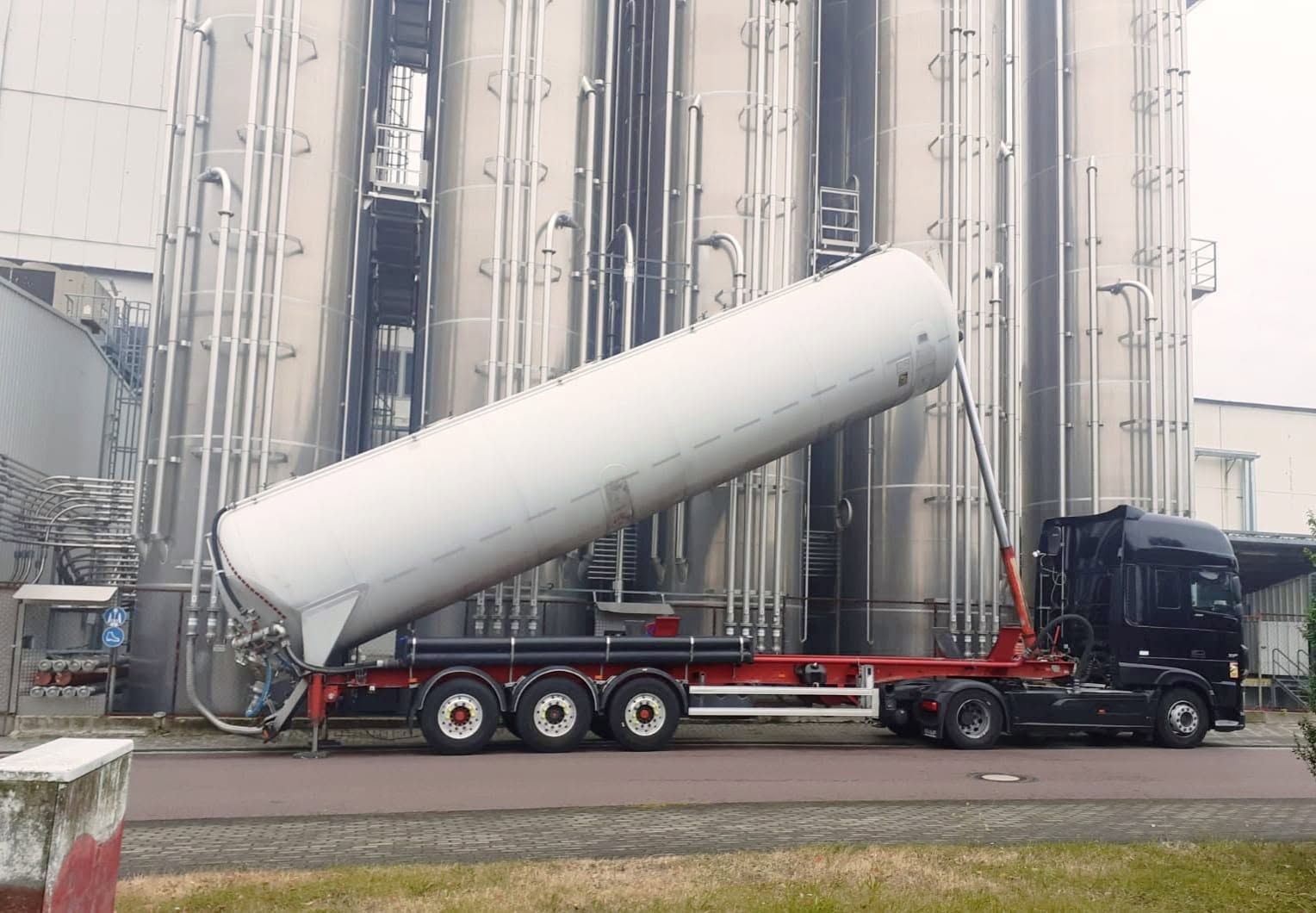
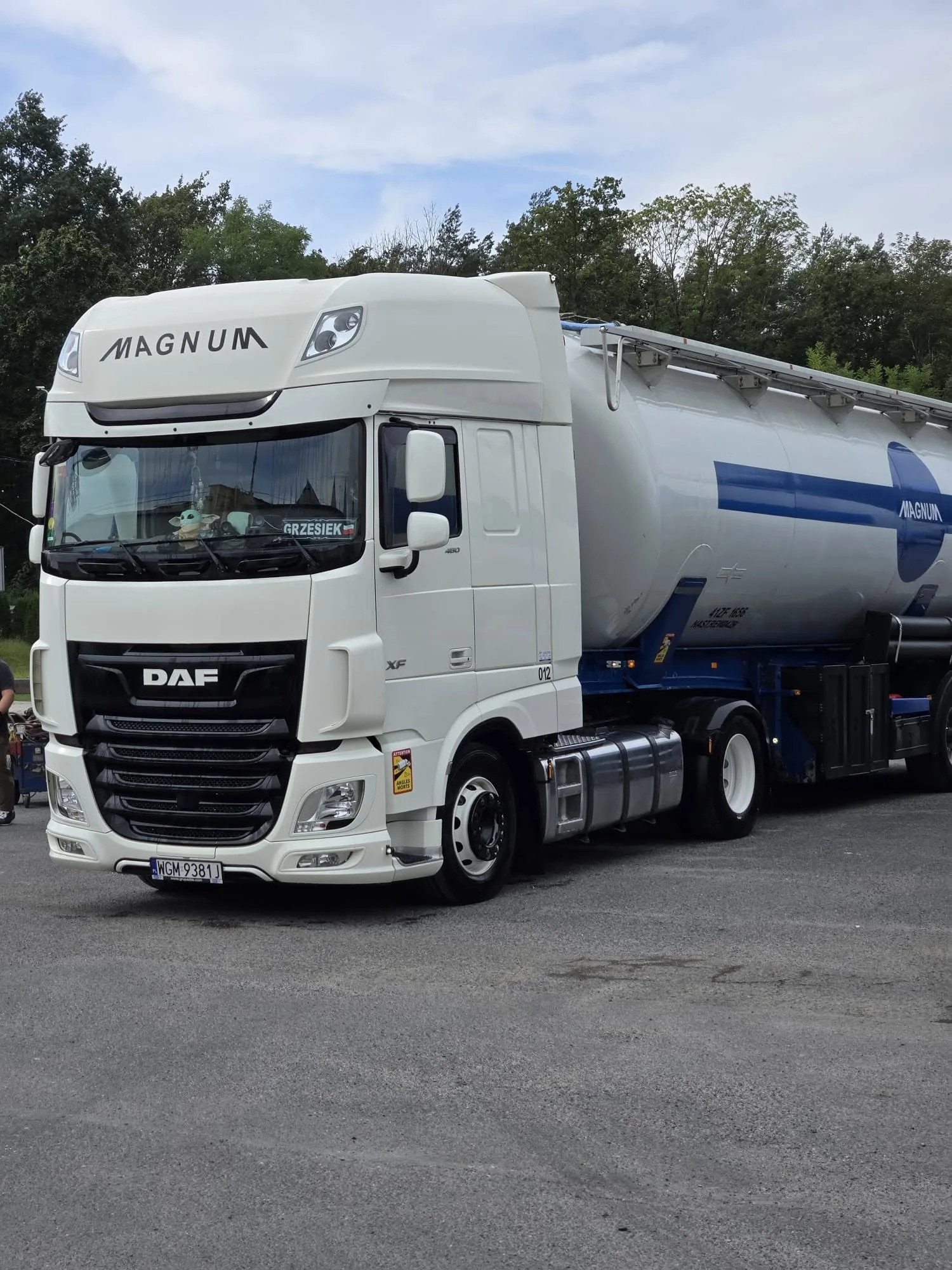
PHS Magnum’s silo trailer routes from the Chorula base cover Poland and the entire EU (mainly Germany, Austria, Czechia, Slovakia). A fleet of 26 DAF Euro 6 tractors + 31 silo trailers of 55–65 m³, all certified for Umweltzone entry.
| Direction | Distance | Driving time | Typical delivery time |
|---|---|---|---|
| Berlin | 520 km | 6-7 h | 1 day |
| Dresden | 280 km | 3-4 h | 1 day |
| Prague | 380 km | 4-5 h | 1 day |
| Leipzig | 460 km | 5-6 h | 1 day |
| Vienna | 600 km | 7-8 h | 1 day |
| Munich | 780 km | 9-10 h | 2 days |
| Hamburg | 820 km | 10-11 h | 2 days |
| Frankfurt | 850 km | 11-12 h | 2 days |
| Stuttgart | 920 km | 12-13 h | 2 days |
| Rotterdam (NL) | 1,100 km | 13-14 h | 2 days |
Chorula’s geographical position — a logistics asset
The PHS Magnum base is 4 km from the A4 motorway interchange (Gogolin) and 180 km from the Polish-German border. That allows us to serve all of western and southern Europe:
- A4 → A12 (DE) → Berlin/Brandenburg
- A4 → A14/A38 (DE) → Leipzig/Saxony/Thuringia
- A4 → CZ-D1 → Prague/Brno/Ostrava
- A4 → CZ-D5 → Vienna/Linz (Austria)
- A4 → A9 (DE) → Munich/Bavaria
- A4 → A2 (DE) → Hamburg/northern Germany
Chorula’s position saves on average 150-300 km compared with a base in, say, Warsaw or Łódź — on every westbound delivery.
Main routes from Chorula
Berlin and Brandenburg (Berlin Brandenburg, the BER airport region)
Route: Chorula → A4 → Görlitz/Zgorzelec crossing → A4 (DE) → A12 → Berlin Distance: 520 km Net driving time: 6-7 h Typical delivery time: 1 day (loading 06:00 → unload 18:00)
Main consignees in Brandenburg: chemical plants in Schwedt, Eisenhüttenstadt, industrial parks along the A12. Frequent materials: PE/PP granulates, regranulates from Polish recyclers.
Dresden and Saxony
Route: Chorula → A4 → Görlitz → A4 (DE) → Dresden Distance: 280 km Driving time: 3-4 h Delivery time: typically 1 day (same-day possible with an early loading)
Dresden is the nearest large German hub to Chorula. Customers: chemical plants in Dresden-Heidenau, BASF sites, plastics plants in the area.
Leipzig and Halle
Route: Chorula → A4 → A14 → Leipzig Distance: 460 km Time: 5-6 h
Leipzig is the logistics centre of eastern Germany — a DHL hub, BMW Werk. Around Leipzig there is a large concentration of chemicals and packaging.
Prague and Czechia
Route: Chorula → A4 → CZ-D1 (via the Cieszyn/Krzyżowice → Bohumín crossing or Boboszów) Distance: 380 km Time: 4-5 h
Czechia is the second largest DACH market for PHS Magnum. A large base of polymer producers (Synthos Kralupy, Unipetrol). Brno (640 km, 7h) and Ostrava (220 km, 3h) — typical destinations.
Vienna and Austria
Route: Chorula → A4 → A1 (CZ) → A5 (AT) → Vienna Distance: 600 km Time: 7-8 h Delivery time: 1 day (planning loading Thursday-Friday with delivery to AT Monday morning)
Austria has its specifics: full motorway Maut, a night driving ban (22:00-05:00) on most motorways. Main consignees: Borealis Linz, OMV Schwechat, Wienerberger.
Munich and Bavaria
Route: Chorula → A4 → A17 → A9 → Munich Distance: 780 km Time: 9-10 h Delivery time: 2 days (arrival in the evening of day 1, unload on day 2)
Munich — a big automotive hub (BMW), chemicals (Wacker), packaging. Route via Dresden-Leipzig-Nuremberg.
Hamburg and northern Germany
Route: Chorula → A4 → A2/A24 → Hamburg Distance: 820 km Time: 10-11 h
Hamburg = the port + large chemical plants (Holborn, Mineralöl). The route typically requires 2 days — the driver takes the overnight rest somewhere between Berlin and Hamburg.
Restrictions on DACH routes
Weekend driving bans
Germany: Sundays and public holidays — a ban for vehicles >7.5 t GVW from 00:00 to 22:00. Drivers may stand at motorway parking areas but not move. Exceptions: vehicles with perishable goods (FRC), not ours.
Austria: Sundays and holidays — a ban 00:00-22:00 for >7.5 t. Additionally, on some sections (Brennerautobahn) a Saturday ban in the summer season.
Czechia: no weekend ban for vehicles >7.5 t — Sunday driving is allowed.
Italy: a ban on Sundays + statutory holidays, with hours changing seasonally (ministerial announcement).
Route planning must account for these bans. The PHS Magnum standard: delivery Friday evening or Monday morning, never “across” the weekend.
Driver working time (Regulation 561/2006)
- A maximum of 9 h driving per day (up to 10h max 2× a week)
- A 45 min break after 4.5h of continuous driving
- 11 h daily rest (reduced to 9h max 3× a week)
- Weekly: max 56h driving
- Over a 2-week period: max 90h
PHS Magnum runs digital tachographs, and the dispatcher verifies the records before every route. Violations = an ITD fine + vehicle detention for 24-72h.
Maut (road tolls)
- Germany: Toll Collect, the rate depends on emissions + distance; a Euro 6 combination pays the lowest band.
- Austria: GO-Box, per-kilometre electronic tolling, differentiated by emission class.
- Czechia: MyTo electronic tolling on the motorway network.
- Slovakia: Skytoll electronic tolling.
- Italy, France, Spain: vignette-based + partly electronic.
Tolls are a significant transport cost — typically 20-30% of a DACH route’s costs. For regular customers they are included in the contract rate.
Transport documents
Basic (every transport)
- CMR (Convention on the Contract for the International Carriage of Goods by Road) — the international consignment note
- Frachtbrief / Frachtpapier — the German domestic version
- Commercial invoice — from the producer to the consignee
- Certificate of origin (if required)
For chemical materials
- MSDS (Material Safety Data Sheet) — safety data sheets, mandatory on board
- REACH conformity certificate — chemicals registered in the EU
- ADR Document (if a dangerous class) — the ADR transport document
For food-contact materials
- Hygiene certificate — from the producer
- Chamber cleanliness certificate (CEFIC Cleaning Document)
- Food-grade certificate of the silo trailer (if required by the consignee)
For regranulates
- Source certificate (information from the recycler — what the material comes from, which batch)
- Analysis results (MFI, particle size distribution, optionally spectroscopy)
- Certificate of conformity with EU 10/2011 (food-contact regulations)
Route planning — the PHS Magnum workflow
- Order: the customer sends a notification with parameters: material (type, quantity), loading location, unloading location, deadline, additional requirements (washing, documents)
- Silo trailer selection: the dispatcher picks a silo trailer matched to the material (Schmidt Polska, Spitzer SF/SK series, Feldbinder)
- Driver selection: by availability + qualifications (ADR if required, foreign languages for DACH)
- Positioning: the silo trailer arrives at the customer’s site within the notified window
- Loading: 1-2h depending on the producer’s infrastructure
- Route: according to plan, tachograph checks, reports from stops
- Unloading: 1-1.5h at the consignee
- CMR signed, invoice issued, documentation archived
Contact
Silo transport in the EU — quotes:
- Dispatcher phone: +48 602 716 551
- E-mail: biuro@magnumchorula.pl
- Standard reply time: 2-4 working hours
For regular customers: a dedicated account manager, monthly invoicing, priority delivery slots.
Related: Silo transport — a guide · What we transport by silo trailer · ADR in chemical transport · Granulate transport from the port of Gdańsk · Tanker vs silo trailer · Silo trailer cleaning