In brief
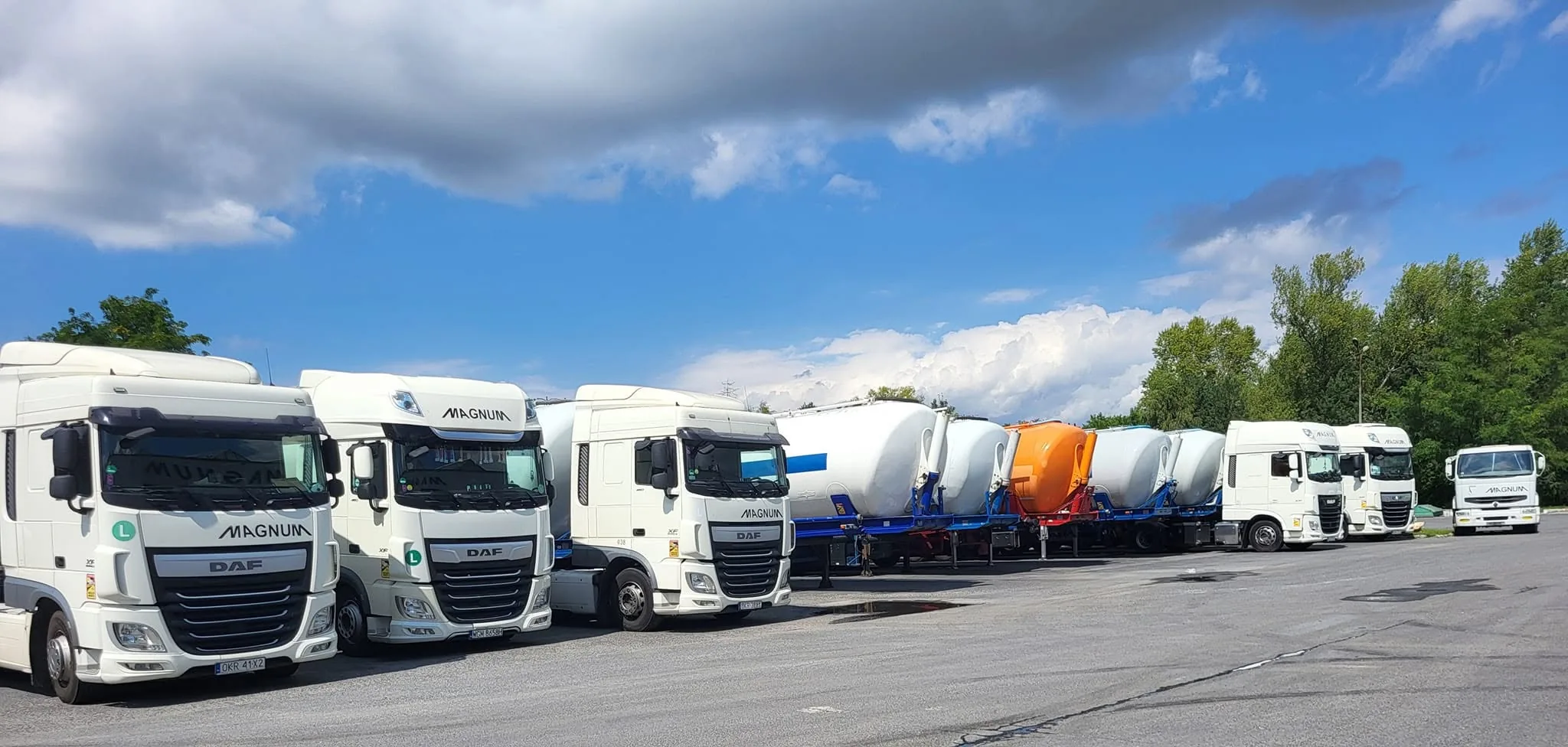
The Gdańsk → Chorula → DACH corridor is, for many PE/PP importers, the shortest route from Asia to end customers in Central-Western Europe. PHS Magnum handles the entire road section: port of Gdańsk → SMIALA terminal Chorula → the customer’s silo in DE/AT.
| Section | Time | Responsibility |
|---|---|---|
| Ship Asia → Gdańsk | 28-35 days | Shipping line + Baltic Hub |
| Customs clearance Gdańsk | 1-3 days | Customer’s customs agency |
| Transport Gdańsk → Chorula | 6-7 h | PHS Magnum (~570 km) |
| SMIALA transloading | 2.5-4 h | SMIALA terminal |
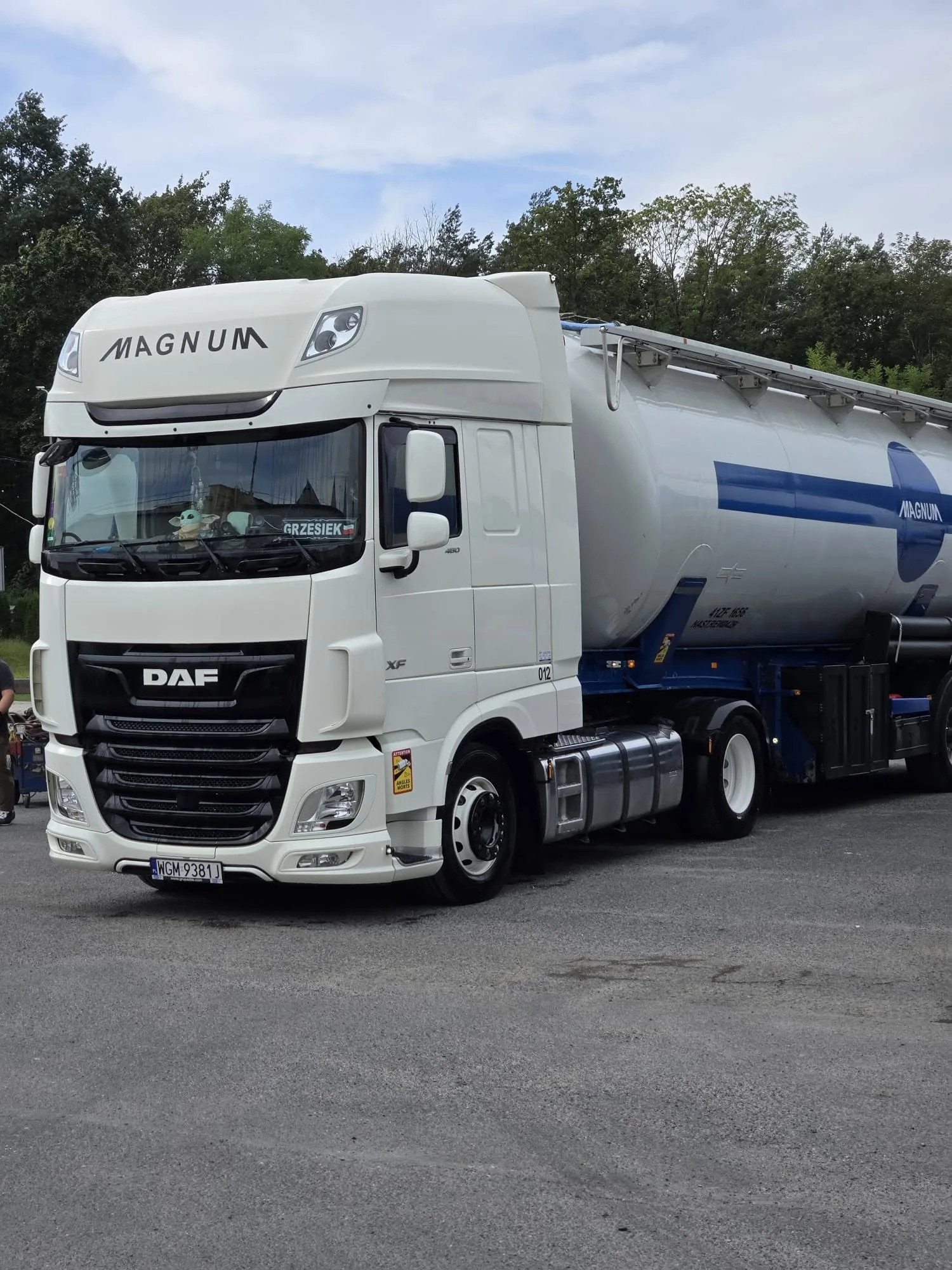
| Transport Chorula → DE/AT customer | 4-12 h | PHS Magnum (DAF Euro 6) |
| Total port → customer’s silo | 48-72 h | (after customs clearance) |
Why Gdańsk for granulate imports
Baltic Hub Container Terminal
Baltic Hub (formerly DCT Gdańsk) — the largest container terminal on the Baltic Sea. After the launch of terminal T3 (2025), handling capacity is ~4.5 million TEU per year. Direct connections:
- FE line (Far East) — Shanghai, Singapore, Busan, Ningbo
- INTAM line — Hamburg/Rotterdam/Antwerp (feeder)
- BAL line — Baltic ports (Klaipėda, Riga, Helsinki)
Transit time Shanghai → Gdańsk: 28-35 days (FCL container). That is 5-7 days faster than via Hamburg → by road to Poland.
Terminal costs
Handling fees at Baltic Hub are typically 15-25% lower than in Hamburg/Bremerhaven for 20’/40’ containers. Plus no German Maut for the first road leg (Gdańsk → DE border = 600+ km inside Poland).
Proximity to motorways
From Baltic Hub to the A1 (motorway heading south): ~15 km. Route: A1 southbound to the A2 interchange, then A2 westbound to the DE border (Świecko). From the port of Gdańsk to the Polish motorway = 30 min from the terminal gate. Polish fleet straight through to Germany/Austria.
Import workflow — step by step
Stage 1: Before the container arrives
Standardly 7-14 days before ETA:
- The customer/importer notifies PHS Magnum: container number, B/L, ETA Gdańsk, material (type, quantity, MSDS), end customer in DE/AT, deadline
- PHS Magnum coordinates the customs agency (if the customer does not have their own), road transport Gdańsk → Chorula, a slot at the SMIALA terminal, a silo trailer suitable for the material, and a driver for the end customer
- The end customer in DE/AT confirms their delivery slot
Stage 2: Container at the port of Gdańsk
- The ship arrives at Baltic Hub
- Container discharge — 6-12 h from berthing
- Customs clearance (after handing the documents to the agency): 1-3 days
- Standard import from Asia (PE/PP): T1 transit or T2 intra-Community
- Deferred VAT (registration in PL) or at the DE border if travelling onwards
- REACH compliance check (chemicals)
- After clearance: the container is released for transport
Stage 3: Transport Gdańsk → Chorula (~570 km)
- A PHS Magnum driver arrives at the Baltic Hub gate
- Pickup of the 20’ or 40’ container
- Route: A1 → A2 → A4 (4-6 hours of net driving, 6-7 with breaks)
- Arrival at the SMIALA terminal in Chorula
Stage 4: Transloading at SMIALA Chorula
- The container enters the terminal premises (Chorula, ul. Kościelna 9)
- Inbound weighing (weight check against the B/L)
- Container unloading: big-bags (typically 20 pieces × 1,000 kg) with a 5 t forklift
- Sequence:
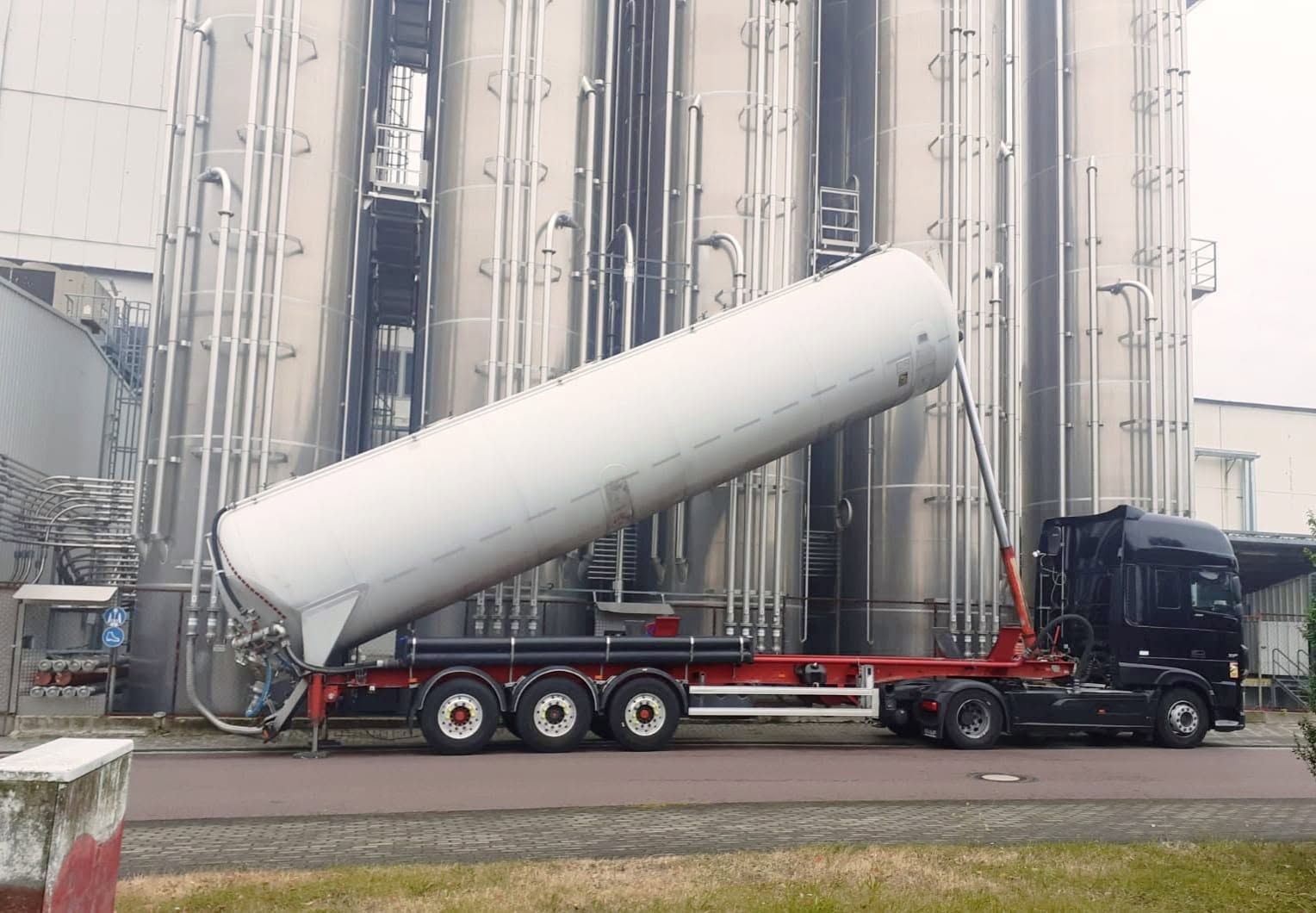
- Standard direct-to-trailer: big-bags from the container straight over the silo trailer
- Storage-then-trailer: big-bags into the warehouse, loaded later (if waiting for another silo trailer)
- Gravity transloading: 3-4 min per big-bag
- Total time for a 20’ container: 2.5-4 h
- Documentation: transloading protocol with big-bag numbers, silo trailer chamber cleanliness certificate
Stage 5: Transport Chorula → end customer in DE/AT
- The silo trailer departs according to the customer’s deadline
- Typical routes (see also DACH routes
):
- Berlin: 6-7 h
- Leipzig: 5-6 h
- Dresden: 3-4 h
- Vienna: 7-8 h
- Munich: 9-10 h
- Pneumatic unloading at the end customer: 1-1.5 h
- CMR signed, quality documentation handed over
Stage 6: Closing the documentation
- PHS Magnum invoice to the importer
- Complete document set: CMR Gdańsk → Chorula, SMIALA transloading protocol, CMR Chorula → DE, proof of delivery
- For materials with QC requirements: chamber cleanliness certificate, moisture report (for hygroscopic materials)
- Customs agency invoice (separately, to the importer)
Example customer scenarios
Mid-volume importer (50-200 t/month)
Profile: a Polish PE/PP distributor with 5-10 end customers in PL/DE/CZ. Imports 2-3 40’ containers per month from Korea.
Workflow:
- Standing framework agreement with PHS Magnum
- SMIALA receives notice of each container 7 days before ETA
- Distributor: different end destinations per container — SMIALA prepares the silo trailers
- Contract rate, monthly invoicing
- Track-and-trace dashboard for the importer
Manufacturer with a production line and its own imports
Profile: a manufacturer in Germany (e.g. a film extruder in Brandenburg) independently imports 1-2 40’ containers per week from LG Chem.
Workflow:
- The manufacturer has its own customs agency in Gdańsk
- PHS Magnum takes over the container after customs clearance
- Workflow Gdańsk → Chorula → the manufacturer’s plant in 36-42 h
- The silo trailer unloads directly into the customer’s production silo
- Chamber cleanliness certificate + moisture report on the CMR
Premium regranulate recycler
Profile: a European PET recycler buys regranulates from Asia (Indorama, Far Eastern) as a blend with its own product.
Workflow:
- 1 container per month with rPET regranulate big-bags
- SMIALA transloads into a silo trailer with optional quality screening (1-10 mm sieve)
- Delivery to the recycler’s warehouse in PL/CZ
- Full batch traceability documentation per big-bag
Materials from Gdańsk — top 5
1. PE-LD and PE-HD (polyethylene) — ~40% of volume
Producers: LG Chem (Korea), Sinopec/PetroChina (China), ExxonMobil (USA via Houston). Standard silo trailer, dry cleaning between loads.
2. PP (polypropylene) — ~30% of volume
Producers: Sabic (Saudi Arabia), Borealis (Austria — re-export), Sinopec (China), Formosa (Taiwan). Standard or aluminium silo trailer (Spitzer SF series) for premium grades.
3. PET bottle-grade — ~15% of volume
Producers: Indorama (Thailand), Plastiverd (Spain), Far Eastern (Taiwan). Hygroscopic — a hall with RH <40% and food-grade wet chamber washing are required.
4. PA6/PA66 (polyamide) — ~8% of volume
Producers: Domo (Belgium), Lanxess (Korea), DuPont (Korea). Strongly hygroscopic — octabins preferred in transport, short transfer window.
5. rPET/rPP regranulates — ~7% of volume
European producers (Poland, Germany) + premium-grade imports from Asia. Visual inspection + screening required during transloading.
Benefits of the Gdańsk corridor
| Parameter | Gdańsk → Chorula → DE | Hamburg → DE (direct) |
|---|---|---|
| Sea time (Asia) | 28-35 days | 35-42 days |
| Terminal fees | Lower (~20%) | Higher |
| Local fleet | Polish (lower rates) | German (higher rates) |
| DE Maut (1 section) | ~480 km | ~820+ km |
| Big-bag → silo transloading | SMIALA Chorula (specialised) | Hamburg port or customer (generic) |
| Total time Asia → DE customer | ~34-40 days | ~37-44 days |
| Price per tonne | Lower on average | Higher on average |
Result: for many Asian producers and Central European buyers, the Gdańsk corridor is cheaper and faster.
Contact
Silo transport, Gdańsk imports:
- Dispatcher phone: +48 602 716 551
- E-mail: biuro@magnumchorula.pl
SMIALA transloading, Chorula:
- Dedicated phone: +48 664 135 005
- E-mail: biuro@magnumchorula.pl
For enquiries about the Gdańsk → DACH corridor, please provide:
- Material (type, quantity, MSDS if ADR)
- Container ETA in Gdańsk (from the B/L)
- Destination address in DE/AT
- Quality requirements (food-grade, moisture, washing)
Individual quote: 4-8 working hours.
Related: Silo transport — a guide · What we transport by silo trailer · Routes to DACH · Big-bag transloading · SMIALA — transloading terminal · Silo trailer cleaning · ADR in chemical transport