In short
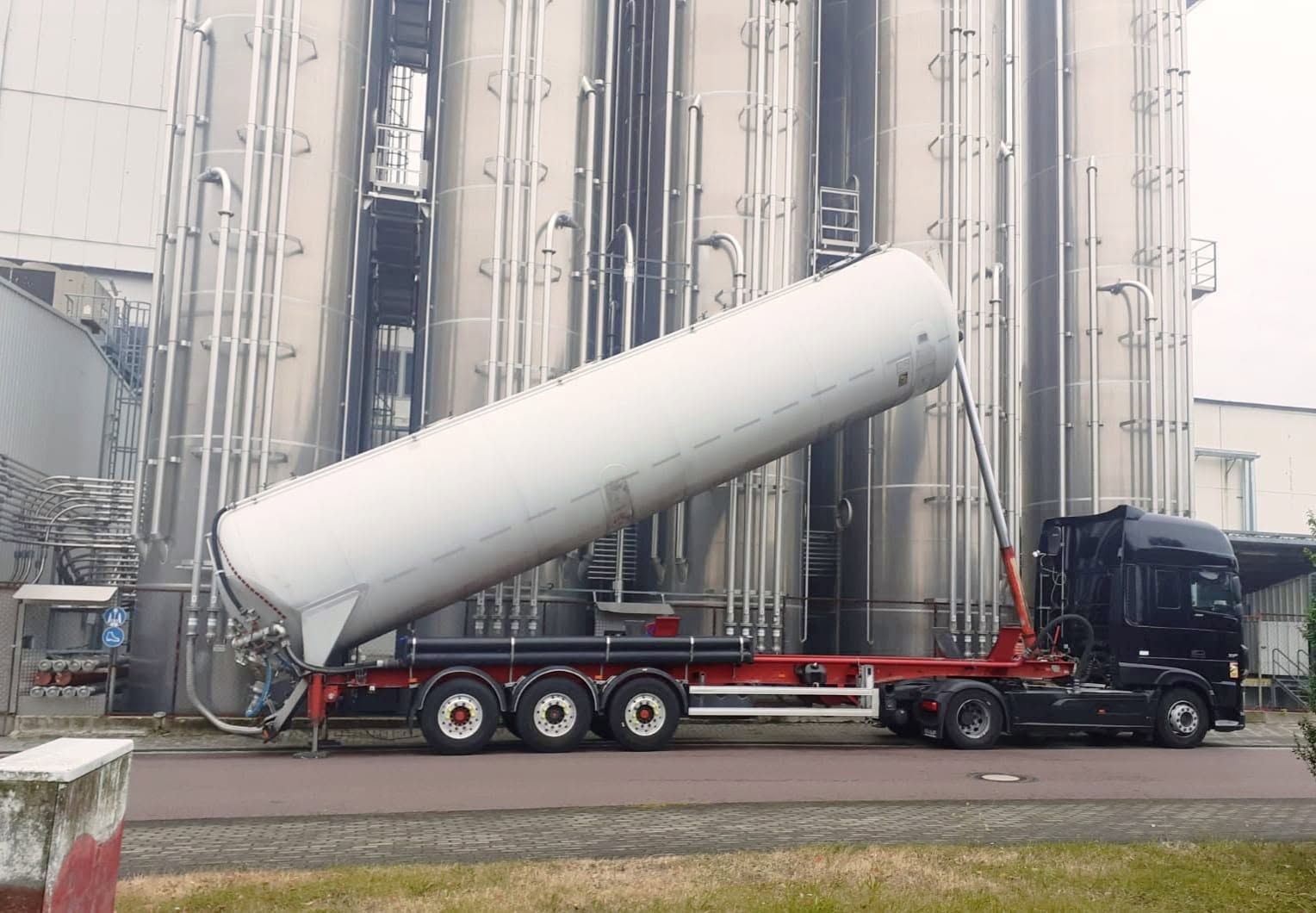
Food-grade tanker washing is high-pressure internal cleaning of the tank with disinfection and drying, completed with a cleanliness certificate. It is required at every load change and before a TDT inspection. The PHS Magnum wash bay in Chorula — 5 km from Krapkowice, 4 km from the A4 (Gogolin junction) — washes tankers, silo trailers, and cement trailers of all brands.
In food-grade and bulk material transport, tank cleanliness is a condition of loading, not an extra. More and more shippers require documented washing before every placement — and a missing cleanliness certificate means a refused load and a lost day. Below is the full procedure: what internal washing covers, how washing after flour and sugar works, why lime is the most difficult case, and how to prepare a tank for a TDT inspection.
Internal vs external washing — what each covers
Internal washing is the core service: high-pressure cleaning of the tank chamber, aeration pads, discharge outlets, and manholes, plus disinfection for food-grade loads. The process ends with compressed-air drying — critical for hygroscopic materials, because moisture in the chamber ruins the next load more effectively than residues of the previous one.
External washing covers the tank shell, chassis, and frame. It matters beyond appearance: a clean shell allows cracks, leaks, and corrosion spots to be noticed early, and before an external TDT inspection it lets the inspector properly assess the condition of the welds and tank surface.
Washing after food-grade materials — flour, sugar, starch
Bulk food-grade materials seem easy to wash off — and that is the trap. Flour and sugar come off with pressurised water, but their residues in dead zones (aeration pads, outlet elbows, manhole seals) combined with moisture ferment and create microbiological hotspots. That is why washing after food-grade loads ends with disinfection and full drying, not just rinsing.
Starch additionally gelatinises in contact with warm water — too high a washing temperature sets the deposit instead of removing it. Procedure matters: zone sequence, temperature, rinsing, drying. Even for a load change within the food-grade range (flour → sugar), full washing with a document is still required — allergens and buyers’ requirements accept no shortcuts.
Washing after lime and mineral materials — the hardest case
Lime is the most demanding load for a wash bay. It is strongly hygroscopic and reacts with water, forming deposits that stick to the shell, aeration pads, and fittings. Rinsing too sparingly leaves a lime film that will contaminate the next load; an under-dried chamber after lime guarantees caking.
Cement, gypsum, and fly ash behave similarly — dust-heavy materials with high adhesion. Washing after them takes the longest and requires intensive high-pressure rinsing, industrial chemicals with neutralisation where needed, and very thorough drying. Switching from a mineral load to a food-grade load without full wet washing and disinfection is out of the question — no serious wash bay will sign off on that.
A practical tip for dispatchers: when planning load rotation, avoid alternating minerals and food-grade materials in the same tank. Every such transition means the most expensive washing variant and the longest downtime — procedure details are on the silo and tanker washing page.
Cleanliness certificate — the document without which there is no loading
The cleanliness certificate confirms that the chamber has been washed to a specified scope after a specified load. The document includes the date and time of washing, the vehicle registration number, the last material carried, the washing scope (internal / with disinfection / external), and a signature and record number compliant with the ISO 9001:2015 quality system.
Shippers in the food and chemical industries require the certificate before every placement of a tank under a new material. A driver without the document comes back from the ramp empty-handed — which is why washing is planned as a fixed element of load rotation, not an emergency add-on. It is worth keeping the certificate in the vehicle documents together with previous ones — washing history does get checked.
Preparing the tank for a TDT inspection
An internal inspection of a pressure vessel requires an empty, washed, and dried chamber with open manholes. The TDT inspector assesses the condition of the welds, internal surface, and fittings — load residues or moisture make the inspection impossible. Washing before the inspection is not a formality; it is a precondition.
The most efficient scenario: washing and TDT inspection at one location, during one visit. In Chorula, the tank drives a few dozen metres from the wash bay to the inspection station — no extra trip, no risk of the chamber getting dirty on the road between the wash bay and the inspection point. A service check or minor repairs can be added in the same visit.
When dry cleaning is enough — and when wet washing is mandatory
Dry cleaning — blowing the chamber through with compressed air plus a visual check — is sufficient only for load changes between compatible materials, e.g. PE granulate to PP granulate. It is fast and introduces no moisture into the tank, which can be an advantage with hygroscopic materials.
Wet washing is mandatory whenever food is involved: before every food-grade load, after every mineral material, and whenever there is any doubt about the chamber’s history. The rule is simple — if you are not certain the previous load was fully compatible with the next one, choose wet washing with a certificate. The cost of a few hours of washing is always lower than the cost of a contaminated batch and a lost contract.
Location: Chorula near Krapkowice, 4 km from the A4
The PHS Magnum wash bay operates in Chorula (Gogolin municipality) — about 5 km from Krapkowice and 4 km from the Gogolin junction on the A4 motorway. For hauliers on the east–west axis (Wrocław–Opole–Gliwice–Katowice), pulling off for a wash requires no detour; it is a few minutes’ drive from the Gogolin junction to the wash yard.
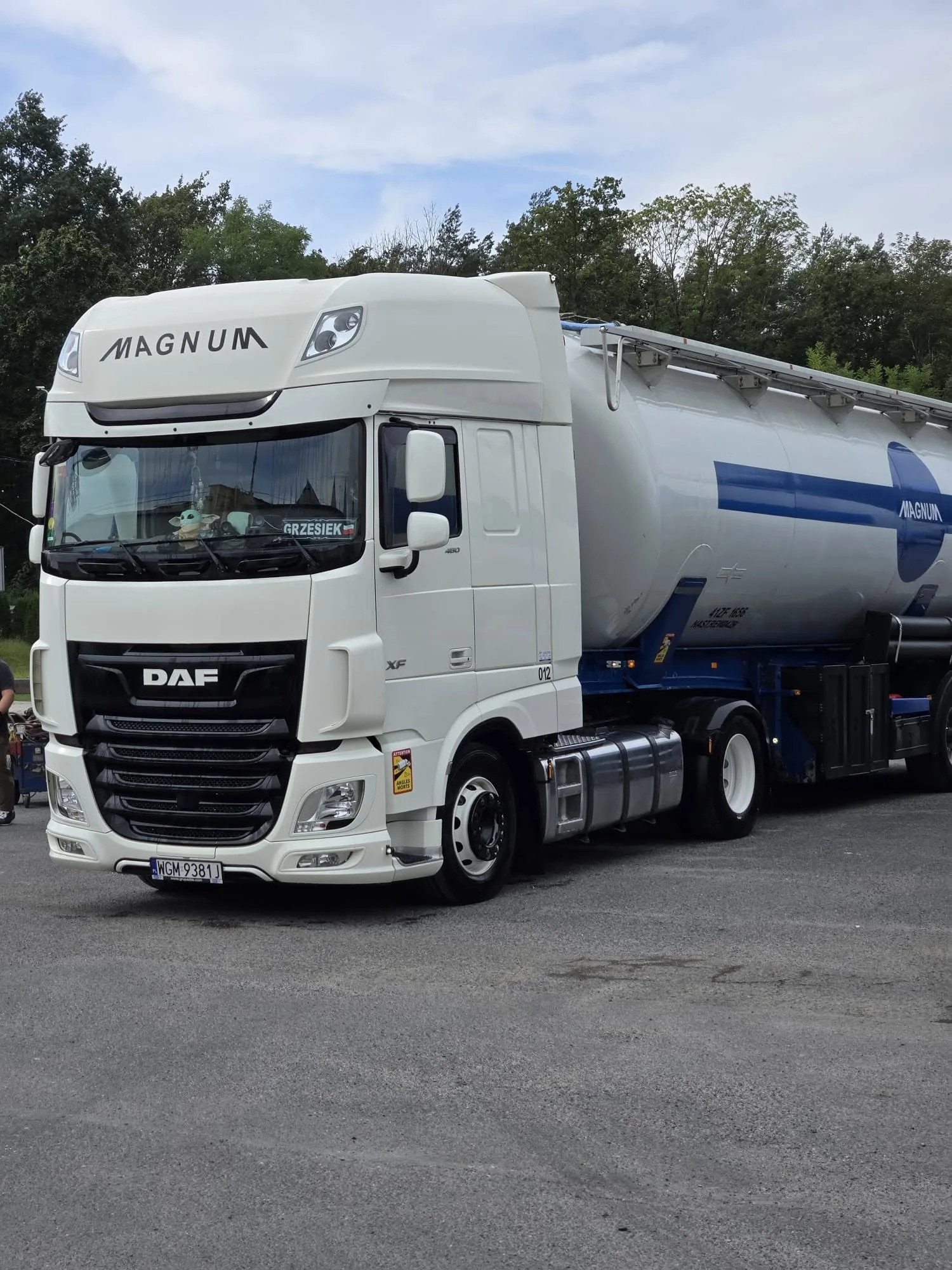
We wash food-grade tankers, silo trailers, and cement trailers regardless of brand or owner — serving both our own fleet (26 DAF XF 480 tractor units, 31 silo trailers of 55–65 m³) and external customers’ vehicles. Working hours: Monday–Friday 06:00–20:00, Saturday 07:00–15:00; Sundays by phone arrangement.
The SMIALA big-bag-to-silo-trailer transloading terminal operates on the same premises — a washed and dried tank can be placed straight under a food-grade or PE/PP granulate load without an extra trip, with the cleanliness certificate in the vehicle documents.
How to book a wash — three steps
- Call or write: +48 602 716 551, biuro@magnumchorula.pl . State the vehicle type, last load, and washing purpose (load change, TDT preparation, periodic washing).
- Book a time slot — for washing after difficult materials (lime, fly ash) or with food-grade disinfection, plan a longer slot. Washing can be combined with a TDT inspection or a service visit.
- Collect the cleanliness certificate — a document with an ISO 9001:2015 record number, ready to show a shipper or an inspector.
A family business, operating since 1991. Ask for a quote — the scope and duration of washing depend on the last load and the requirements of the next one.