In brief
R-PET (recycled polyethylene terephthalate) is transported in the same pneumatic silo trailers as virgin PET, but with stricter procedures: a dedicated food-grade fleet, a documented load history, batch traceability, a cleanliness certificate for every cycle. The technical differences are minimal: pellet density practically identical, load temperature may be elevated (40-60°C after depolymerisation), moisture sensitivity higher (PET is hygroscopic). With recycled content forced by PPWR (30% in PET bottles from 2030, 65% from 2035) — the R-PET transport segment will be the fastest-growing in the EU.
Three types of R-PET and their characteristics
Mechanical R-PET (physical recycling)
Process: colour sorting of bottles → grinding into flake → washing → drying → regranulation in an extruder. Result: pellets slightly less uniform than virgin, minor discolouration possible.
Applications: non-food packaging, textile fibres, strapping. Price: 5-15% below virgin.
Food-grade R-PET
Process: mechanical R-PET passing through a super-clean process (elevated temperatures, extended vacuum stages, decontamination). Result: pellets meeting EFSA standards for food contact.
Applications: beverage bottles, food packaging. Price: at virgin level or above (a segment with PPWR-driven demand).
Chemical R-PET (depolymerisation)
Process: PET waste → chemical reaction (glycolysis, methanolysis) → monomer → repolymerisation → pellets identical to virgin. Result: 100% virgin quality, accepted by all food-grade certificates.
Applications: any virgin PET application. Price: initially above virgin (a young technology), 2027-2030 forecast: parity with virgin.
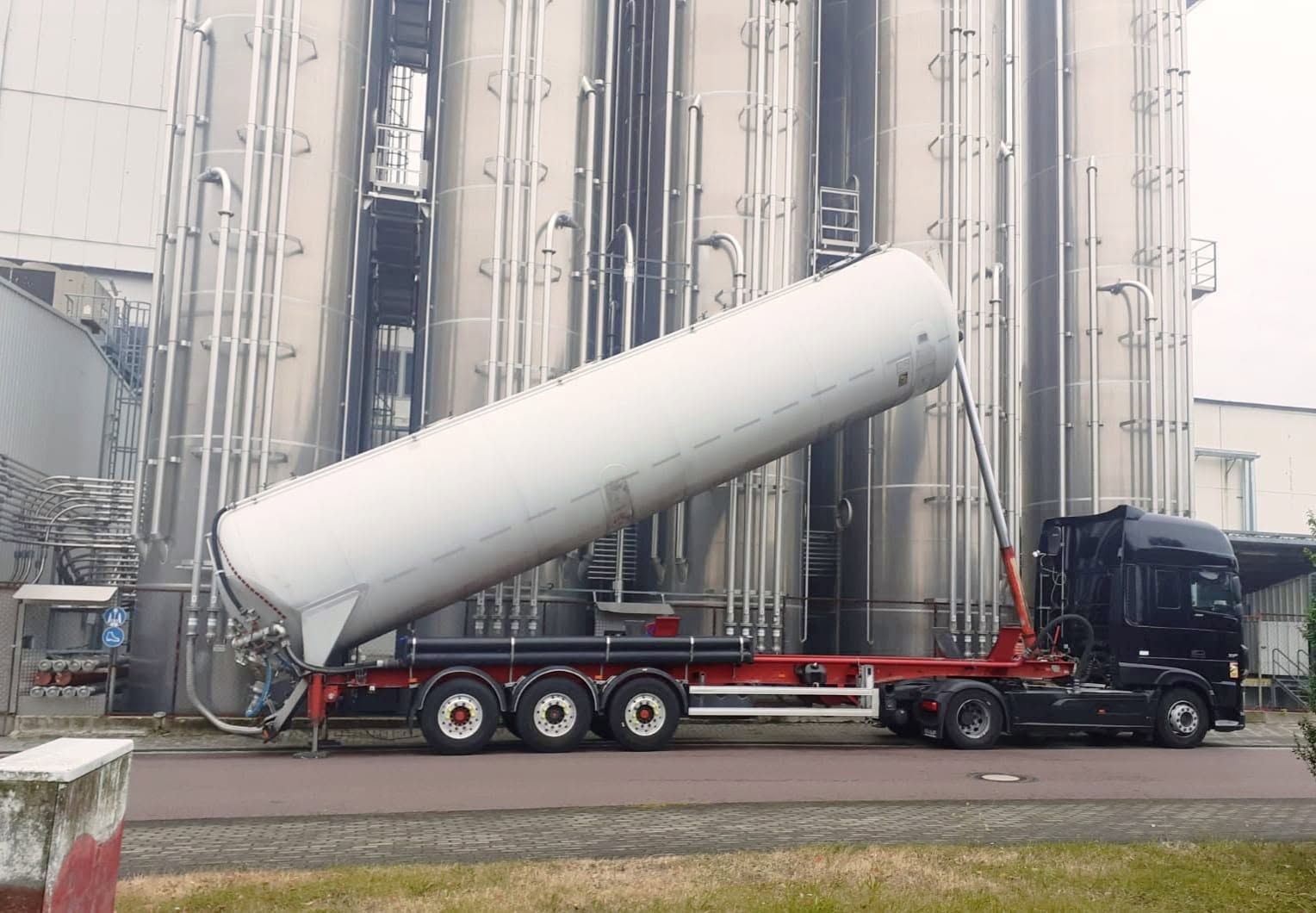
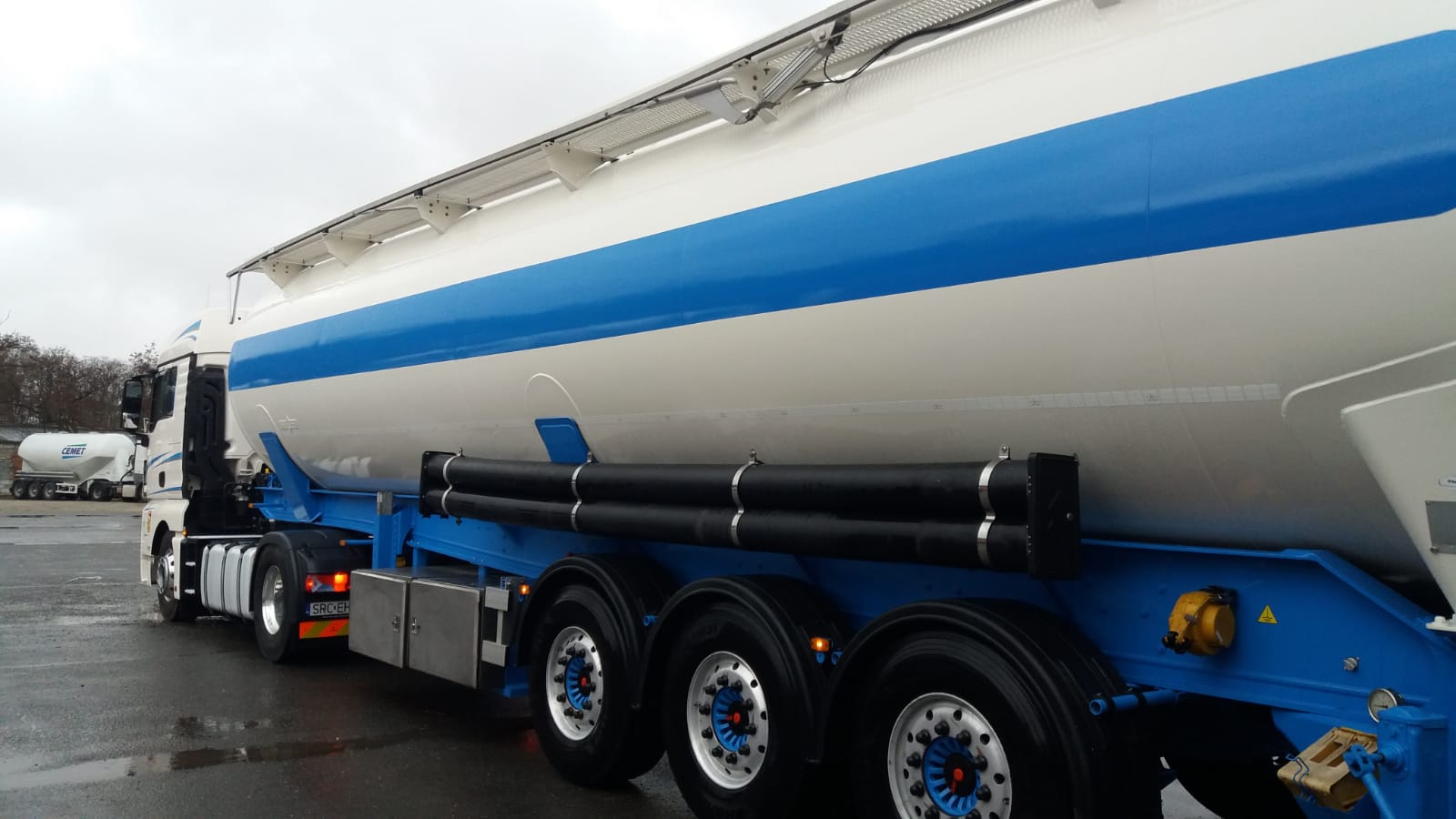
All three types are transported in pneumatic silo trailers exactly like virgin PET. The differences lie at the level of procedures, not equipment.
Four key operational differences
1. Batch traceability
Every R-PET batch has a batch number from the recycling plant, a production date, a recycled content certificate (PCR Content), and possibly a food-grade certificate. The carrier must enter these data on the CMR and pass them to the consignee.
The digital CMR (e-CMR) is becoming the standard from 2026 — the system automatically transmits the batch data along with a loading photograph.
2. Silo trailer cleanliness certificate
Before loading R-PET (especially food-grade), the shipper often requires a silo trailer cleanliness certificate — a document issued by the carrier containing: the history of the last 3-5 loads, the date and method of the last cleaning, a visual chamber inspection signed by the driver.
For dedicated food-grade silo trailers — the history is long-term (from the vehicle’s purchase, it has carried only food-grade).
3. Load temperature
R-PET fresh from the depolymerisation process can be at 40-60°C. Standard aluminium and stainless steel silo trailers tolerate this temperature. The silo trailer’s engineering plastics (EPDM or silicone seals, PTFE/PP aeration pads) must have the appropriate temperature class — most components are rated to 100°C as standard.
Some shippers prefer full cooling of the batch to ambient temperature before dispatch (12-48h of resting in the warehouse) — then there are no additional thermal requirements.
4. Moisture
PET is hygroscopic — it absorbs moisture from the air. Moisture in R-PET raises the water content in the final packaging and degrades its mechanical properties (hydrolysis).
Procedure: blowing the silo trailer through with dry compressed air between cycles (never water). The load is dried at the consignee’s plant before use.
Chamber cleanliness — the biggest risk
Contamination of R-PET by residues of other materials is the biggest transport risk. Consequences:
- PVC contamination: changes the colour, lowers the melting point, makes the R-PET unfit for transparent bottles
- Polyolefin contamination (PE/PP): creates opaque spots in the final bottle, the batch is rejected
- Contamination with non-food materials: disqualifies the batch from the food-grade segment
The PHS Magnum procedure for food-grade R-PET silo trailers:
- Dedicated vehicles (the entire load history = food-grade only)
- Blow-through with dry compressed air between every cycle
- Visual inspection of the chamber at the manhole, discharge valve, aeration pads
- An entry in the cycle register (date, load, location, driver, signature)
- A cleanliness certificate at the shipper’s request (ISO 9001:2015 standard)
We use wet washing exclusively on a category change (e.g. after carrying non-food R-HDPE, before the next food-grade R-PET). Washing requires 24-48h of drying time.
Shipper requirements — a checklist
What the shipper should specify in a food-grade R-PET transport order:
- Requirement of a dedicated food-grade silo trailer (full load history)
- Chamber cleanliness certificate on the day of loading
- Maximum load temperature at loading (typically 50°C)
- Moisture requirements (typically: the load comes from a climate-controlled warehouse)
- Batch traceability (batch number, PCR Content certificate)
- Digital CMR with a loading photograph
- Driver trained in PPLP procedures (Regulation 2025/2365)
- Carrier certificates: ISO 9001, OCS, RecyClass, ISCC PLUS
What PHS Magnum offers in the R-PET segment
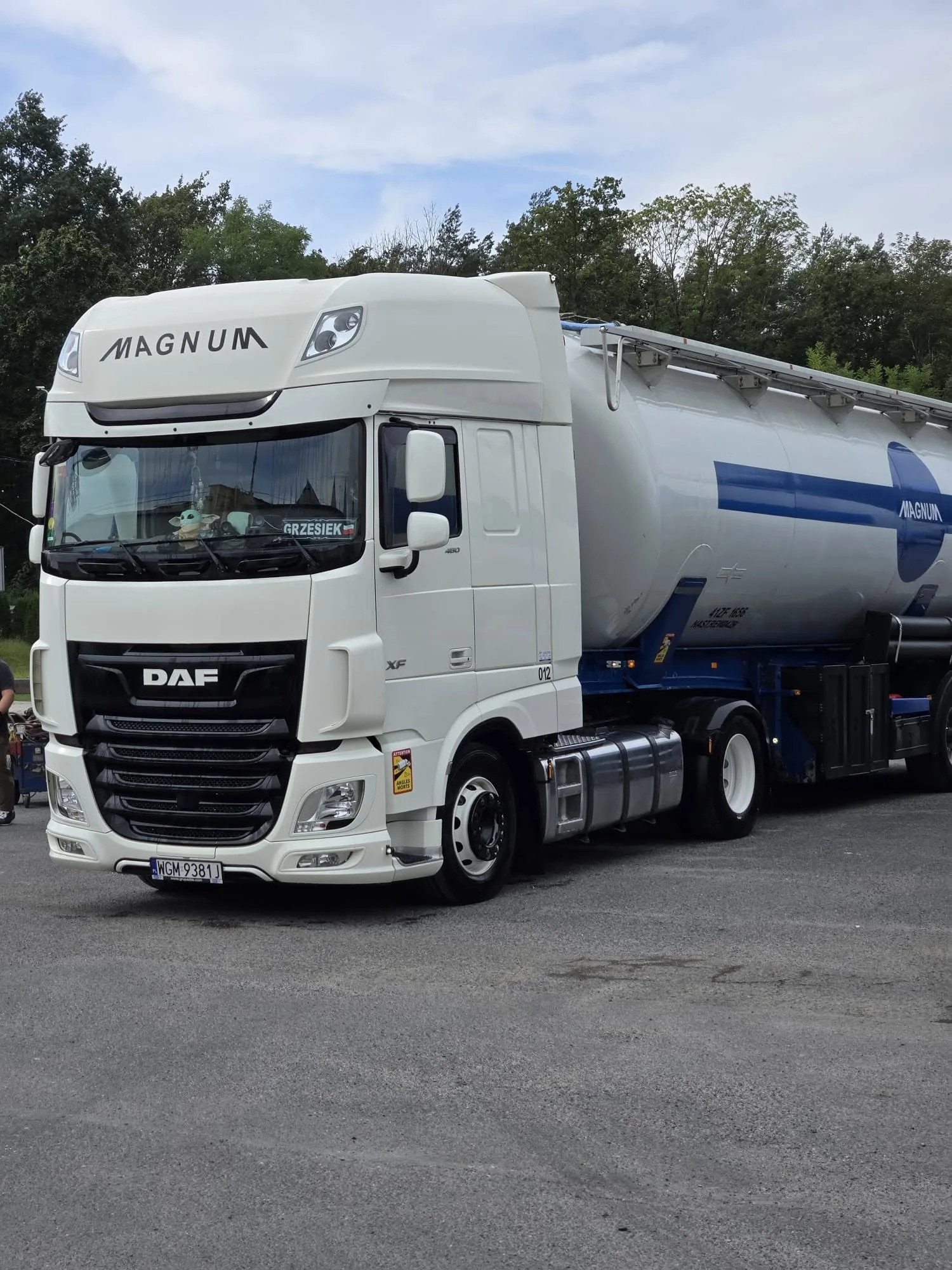
- Dedicated food-grade silo trailers — selected units in the fleet of 31, dedicated to food-grade granulates
- Cleanliness procedures — compliant with ISO 9001:2015 and OCS guidelines
- Cycle traceability — a register of every loading-transport-unloading cycle
- Route geography — 4 km from the A4, 180 km from the DE border; PL→DACH routes in 12-24h
- Drivers trained in PPLP — mandatory training in the procedures of Regulation 2025/2365 since 2025
Contact: biuro@magnumchorula.pl , +48 602 716 551.
Related
- PPWR 2026 — impact on demand for R-PET, R-HDPE, R-PP recyclate transport
- Operation Clean Sweep (OCS) — certification of a silo trailer carrier
- Silo trailer cleaning — procedure
- PE and PP granulate transport by silo trailer across the EU
About the author
This content was prepared by the PHS Magnum team in cooperation with Aleksy Pasternak — the company’s Managing Partner, a bulk material transport expert with 35 years of experience in trading plastic granulates, recyclates and industrial minerals in the EU. Aleksy publishes industry analyses on the expert portal pasternak.me , where you will find further studies on regulatory topics (PPLP, PPWR, OCS), technical topics (silo trailers, TDT) and operational topics (big-bag transloading, repackaging).