In short
PPWR — the EU Packaging and Packaging Waste Regulation — applies from 12 August 2026 across the EU. The most important effect for logistics: mandatory recycled content in plastic packaging. For PET bottles: 30% from 2030, 65% from 2035. For PE/PP: 10% from 2026, 35% from 2030. The consequence: a 5–10x rise in demand for R-PET, R-HDPE, and R-PP regranulate transport in the EU over the decade. Poland — with its strong recycling base — is becoming a recyclate supplier for the whole DACH region. Silo trailer transport is becoming the bottleneck.
Where the demand growth comes from
Before the PPWR takes effect, around 15% of plastic packaging in the EU contains recyclate (mainly PET bottles). A forced jump to 30–65% within 10 years means a several-fold increase in the volume of recyclate circulating in the supply chain:
- 2026: ~5 million tonnes/year of PE/PP/PET recyclate in EU circulation
- 2030: ~10–12 million tonnes/year
- 2035: ~20–25 million tonnes/year
Every tonne of recyclate requires transport from where it is produced to the processing plant. Unlike virgin material (often produced right next to a chemical plant), recyclate has dispersed sources (sorting plants in many cities) and concentrated destinations (packaging producers, PET bottles, food-grade films).
This is a geometric increase in tonne-kilometres in the EU plastics trade.
The three main recyclate types and their transport characteristics
R-PET (recycled polyethylene terephthalate)
Main application segment: beverage bottles, food packaging. Form: crystalline or amorphous pellets. Density: 1.3–1.4 g/cm³.
In chemical recycling (depolymerisation), pellets may leave the reactor slightly warm — a silo trailer capable of carrying material up to 60°C is required. Cleanliness is critical: contamination with PVC or polyolefins significantly reduces the recyclate’s value.
Main routes: Germany, Italy (chemical recycling plants) → Poland, Czechia, Spain (bottle production plants). Poland — positioned as both producer and recipient.
R-HDPE (recycled high-density polyethylene)
Main applications: bottles for household chemicals, cosmetics, transport packaging. Density: 0.94–0.97 g/cm³.
Pellets at ambient temperature — no special thermal requirements. Cleanliness matters, but tolerance for minimal contamination is higher than with R-PET.
Routes: recyclate producers dispersed across the EU → HDPE packaging producers mainly in DE, FR, PL, IT.
R-PP (recycled polypropylene)
Applications: food packaging (cups, containers), closures, transport packaging (crates), technical textiles. Density: 0.90–0.92 g/cm³.
The newest segment certified for food contact — strong growth dynamics after the PPWR (the first recycled content requirements for food-grade PP take effect in 2026).
Routes: newly built chemical PP recycling plants in the Netherlands, Austria, Poland → packaging producers in DACH and Western Europe.
What the PPWR forces on the recyclate supply chain
1. Chain of custody certification Every recyclate transport must have documented origin — from the sorting site to the packaging producer. Schemes: RecyClass, ISCC PLUS, EuCertPlast.
2. Transport traceability Batch number, recyclate production date, loading location, silo trailer number, driver — this is the data set the shipper and recipient must see with every delivery. Most hauliers will need digital tracking systems (electronic CMR, GPS, loading photos).
3. Category cleanliness protection A silo trailer carrying food-grade R-PET must not previously have been used for materials outside the food-grade range (cement, lime, but also e.g. non-food R-HDPE). This narrows the pool of silo trailers “dedicated” to food-grade — a premium on the transport market from 2026 onward.
4. Full PPLP compliance Recyclates are a type of plastic pellet — they fall under Regulation (EU) 2025/2365. Recyclate transport = pellet transport. The OCS and RMP requirements apply exactly as they do for virgin material.
Questions to ask a haulier before the first recyclate run
A practical list for shippers:
- Do you have silo trailers dedicated to food-grade (never used for non-food materials)?
- Do you hold a RecyClass / ISCC PLUS certificate for the supply chain?
- What traceability procedures do you have (electronic CMR, GPS, photos)?
- What is the silo trailer cleaning procedure between two recyclate loads of different categories?
- Are your drivers trained in PPLP procedures (Regulation 2025/2365)?
- Do you hold ISO 9001:2015 certification as the base of your quality management system?
Hauliers meeting all six criteria are a minority in 2026 — a recyclate shipper gains real market value by finding and maintaining a stable partnership with such a carrier.
Poland as a recyclate hub for DACH
Poland has three structural advantages in the segment:
- Scale of waste plastic imports (by 2026, the export ban to non-OECD countries redirects the stream to recyclers inside the EU — Poland is the largest recipient in the region)
- Geography — Poland ranks among the top EU countries by number of mechanical recycling plants; a growing chemical recycling base
- Location relative to DACH — 180–300 km to most packaging producers’ plants in Germany and Austria
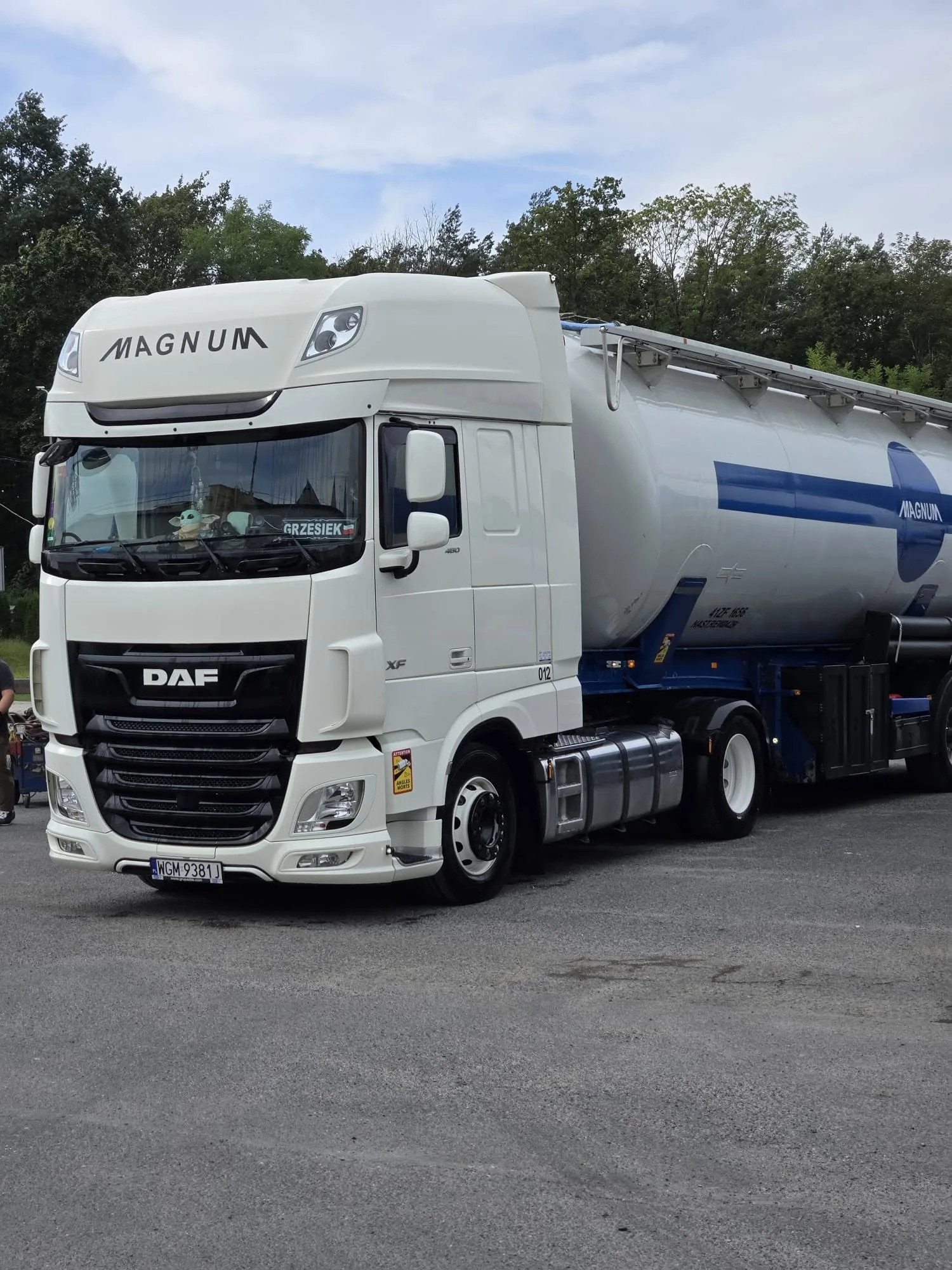
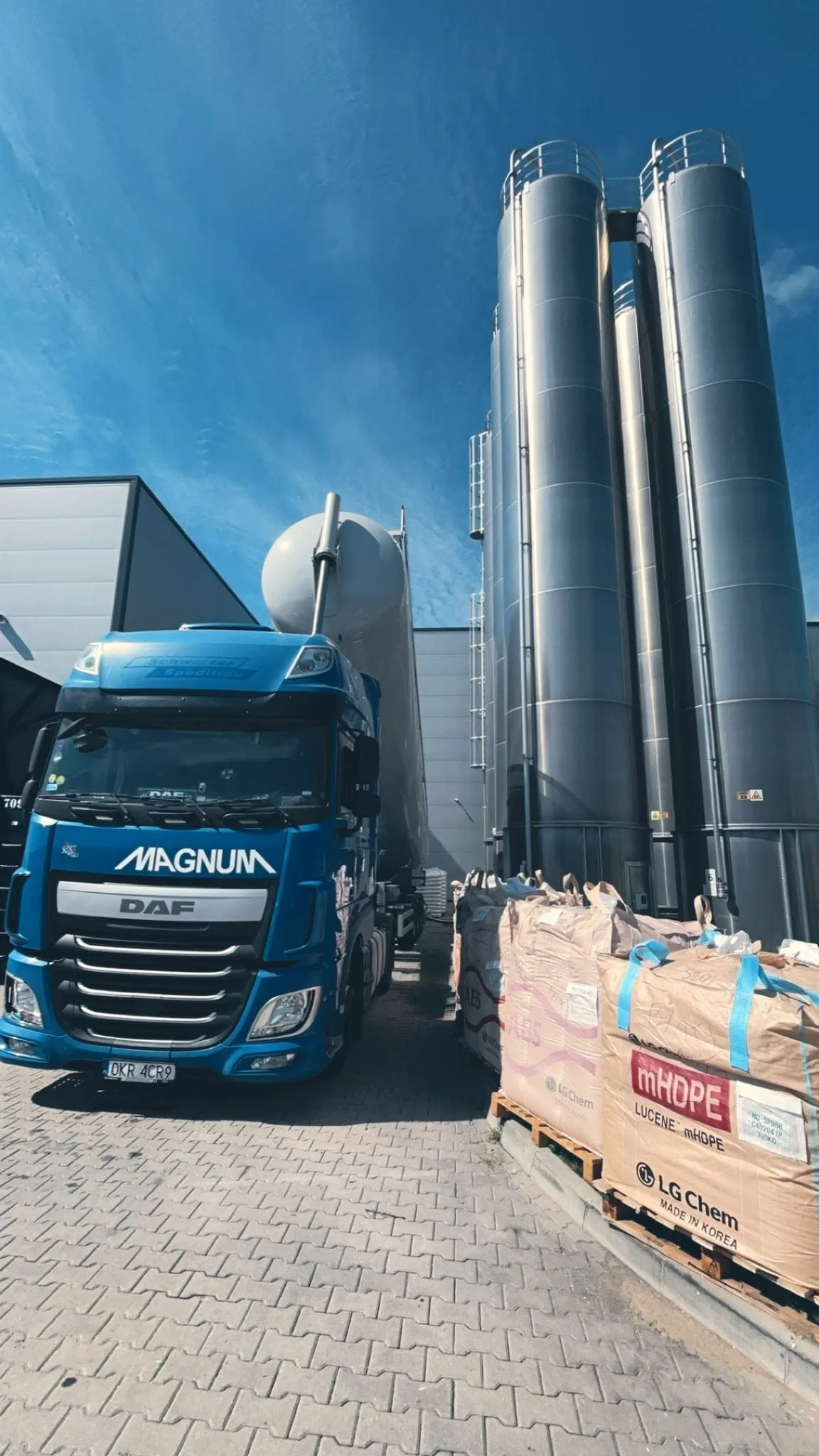
PHS Magnum, based in Chorula (4 km from the A4, 180 km from the German border) — sits at the natural crossing point of Poland → DACH recyclate routes.
Timeline of the PPWR’s impact on transport
| Year | What happens in recyclate transport |
|---|---|
| 2026 | First mandatory PP/HDPE recycled content requirements (10%). A step change in demand. |
| 2027–2028 | Full PPLP rollout — hauliers without OCS excluded from major shippers’ tenders. |
| 2030 | 30% recycled content for PET bottles, 35% for PE/PP. A second volume jump. |
| 2035 | 65% recycled content for PET bottles. Recyclates dominate over virgin in some segments. |
| 2040 | Further threshold increases (indicative). |
Operational takeaway for the industry
Silo transport in the EU faces a deep reconfiguration in 2026–2035:
- less virgin material (growing substitution by recyclate)
- more recyclates (geometric growth)
- higher procedural requirements (PPLP + PPWR)
- a premium for early-certified hauliers (OCS, RecyClass, ISCC)
- market consolidation — smaller hauliers without certificates drop out
Shippers planning operations for 2027 and beyond — the time to start talks with hauliers is 2026.
Related
- Operation Clean Sweep (OCS) — haulier certification
- Transporting PE and PP granules by silo trailer in the EU
About the author
This content was prepared by the PHS Magnum team in cooperation with Aleksy Pasternak — Managing Partner of the company and a bulk material transport expert with 35 years of experience in trading plastic pellets, recyclates, and industrial minerals in the EU. Aleksy publishes industry analyses on the expert portal pasternak.me , covering regulatory topics (PPLP, PPWR, OCS), technical topics (silo trailers, TDT), and operations (big-bag transloading, contract packing).