Key takeaways
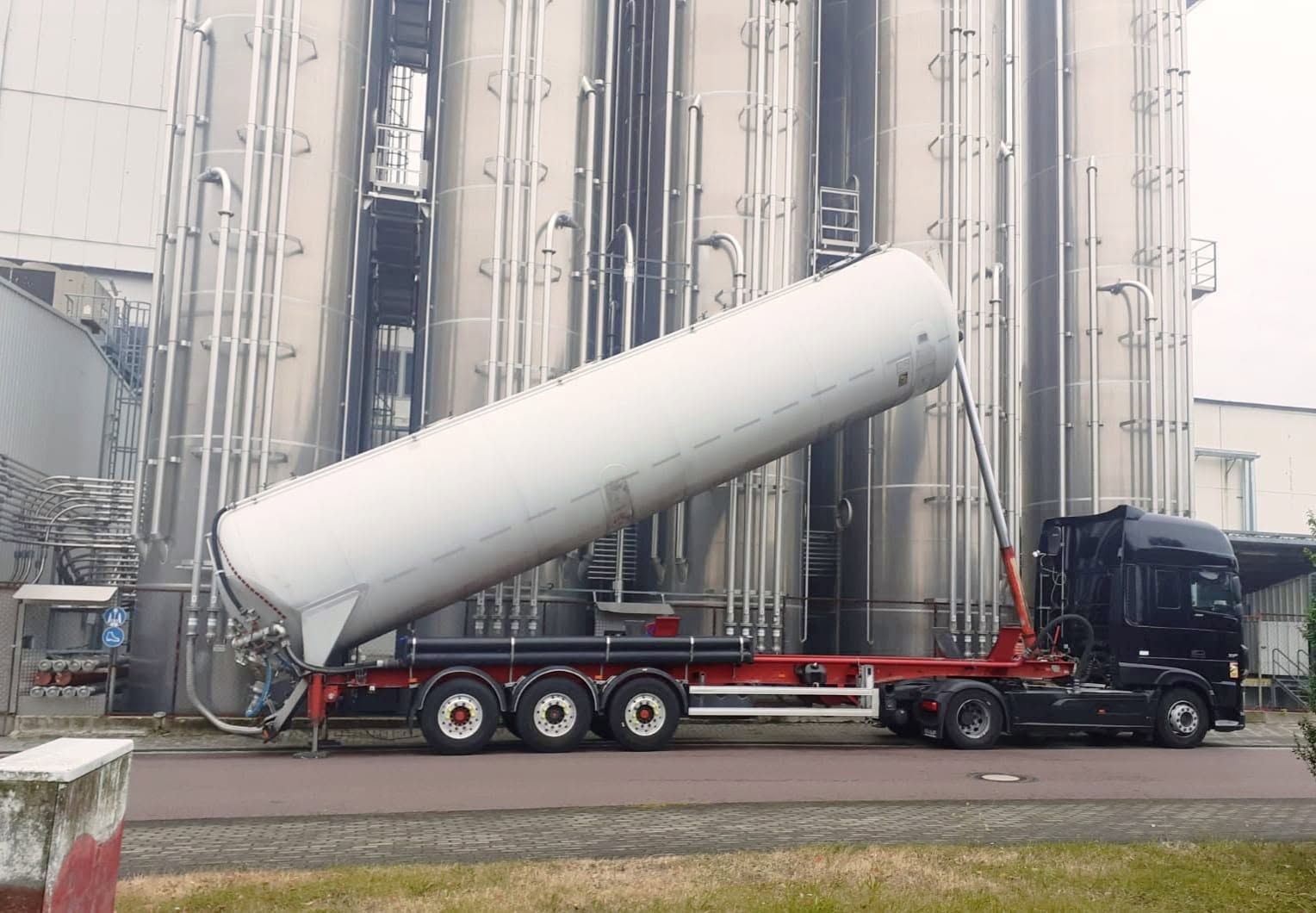
A practical checklist for the driver of a silo trailer transporting plastic granules (PE, PP, PET, ABS, R-PET, R-HDPE etc.) in line with Regulation (EU) 2025/2365 on preventing plastic pellet loss. The list covers the full cycle: before leaving the depot, during loading, en route, at unloading, and after the cycle. Time required: ~15-20 minutes for a full cycle. On-board equipment: shovel, bags, funnel, adhesive strips, gloves. Documentation: cycle log, incident report (if a spill occurs).
On-board equipment — this must be on every silo trailer
The PPLP obliges the carrier to have equipment for containing and cleaning up spills. The minimum:
- Shovel — preferably a large metal or plastic one, for collecting spills from hard surfaces
- Broom — with stiff bristles (for sweeping up pellets; not straw — it scatters pellets)
- Collection bags — 25-50 L, typically 5-10 on board, labelled “recovered pellets — for disposal”
- Funnel — for transferring collected pellets from the shovel/sweepings into the bag
- Adhesive strips — for minor spills on uneven surfaces (e.g. asphalt, kerbs)
- Work gloves — one pair on board
- Bucket-type container — optional, for collecting in wet conditions
The whole kit fits in the silo trailer’s side box. Check it weekly or after every use — replace worn items, restock any shortages.
Checklist — before leaving the depot
| # | Task | OK |
|---|---|---|
| 1 | Check the condition of the on-board equipment (kit complete) | [ ] |
| 2 | Check the tightness of the discharge valves (caps tightened) | [ ] |
| 3 | Check the manhole seals (visually: no cracks, elasticity retained) | [ ] |
| 4 | Check the aeration pad seals (visual inspection) | [ ] |
| 5 | Document check: CMR, material SDS (if ADR), cycle log | [ ] |
| 6 | Check the pneumatic system pressure (auxiliary supply) | [ ] |
| 7 | Cleanliness certificate for the chamber from the previous cycle — signed | [ ] |
Every “yes” → next step. A “no” at any point = report to the dispatcher, repair or swap the silo trailer.
Checklist — during loading at the shipper
| # | Task | OK |
|---|---|---|
| 1 | Report to the loading operator — present the cleanliness certificate | [ ] |
| 2 | Check the loading pipe connection (clamp, gasket) | [ ] |
| 3 | Monitor the area under the silo trailer during loading (any dripping?) | [ ] |
| 4 | Check valve tightness after loading | [ ] |
| 5 | Visual check of the area after disconnecting the pipe — pellets on the ground? | [ ] |
| 6 | If pellets are on the ground → collect them before departing | [ ] |
| 7 | Sign the CMR with a photograph of the cargo (e-CMR) | [ ] |
| 8 | Collect the material certificate (batch number, density, food-grade if applicable) | [ ] |
Checklist — en route
Checkpoint every 200-300 km or after every break:
| # | Task | OK |
|---|---|---|
| 1 | Visual check of the silo trailer from outside — no spills | [ ] |
| 2 | Check the discharge valves — no play, no leakage | [ ] |
| 3 | Check flange connections (if visible) | [ ] |
| 4 | Check aeration pads (if visually accessible) | [ ] |
| 5 | Check the parking area on departure — no pellets left behind | [ ] |
If a spill is detected → response procedure (section below).
Checklist — at unloading at the consignee
| # | Task | OK |
|---|---|---|
| 1 | Report to the unloading operator, agree the procedure | [ ] |
| 2 | Check the unloading pipe connection | [ ] |
| 3 | Open the valve in the presence of the consignee’s operator | [ ] |
| 4 | Monitor the pneumatic system operation (pressure, flow) | [ ] |
| 5 | Monitor the area under the silo trailer during unloading | [ ] |
| 6 | After emptying — check that nothing remains in the chamber | [ ] |
| 7 | Close the valves, stow the pipe | [ ] |
| 8 | Visual check of the area after disconnecting the pipe | [ ] |
| 9 | Collect any spilled pellets (if present) | [ ] |
| 10 | Have the consignee sign the CMR, make an entry in the cycle log | [ ] |
Checklist — after the cycle (before the next load)
| # | Task | OK |
|---|---|---|
| 1 | Entry in the cycle log (date, material, loading/unloading location, signature) | [ ] |
| 2 | Blow out the chamber with dry compressed air (if changing material) | [ ] |
| 3 | Wet washing (only if changing category — e.g. food → non-food) | [ ] |
| 4 | Visual check of the chamber at the manhole | [ ] |
| 5 | Issue a cleanliness certificate for the next cycle | [ ] |
| 6 | Incident report (if spills occurred) to the dispatcher | [ ] |
| 7 | Restock the on-board equipment (bags, strips, gloves) | [ ] |
Pellet spill response procedure
Step 1: stop Stop the silo trailer in a safe place. Do not continue driving — pellets on the outside may keep spilling.
Step 2: locate the source Check the typical leak points:
- Discharge valves (loose, damaged gasket)
- Manhole (loose bolts, cracked gasket)
- Flange connections (cracks, corrosion)
- Aeration pads (cracked)
Step 3: temporary sealing If the leak is a loose valve or bolts — tighten them. If a gasket is cracked — wrap it with sealing tape or replace it with a spare (if carried on board).
Step 4: collect the spilled pellets Use the on-board equipment. Collected pellets → the bag labelled “recovered pellets — for disposal”.
Step 5: contact the dispatcher Report the incident immediately. The dispatcher decides whether to:
- Continue the route (minor incident, effective repair)
- Call for assistance (larger incident requiring a mobile workshop)
- Order mobile truck service en route (larger repair)
Step 6: documentation Once the situation is under control:
- Entry in the incident log (date, place, description, actions, quantity of recovered pellets)
- Photograph of the leak source
- Photograph of the site after clean-up
- E-mail report to the safety coordinator at the depot
Step 7: after returning to the depot
- Silo trailer service — repair of the leak source
- Incident analysis — did the procedure work, are corrections needed
- Recovered pellets — disposal according to procedure (recycling if clean, waste if contaminated)
Most common mistakes
No check between cycles — the driver takes the next load without checking chamber cleanliness. Consequence: batch contamination, rejection at the consignee, a cost running into tens of thousands of euros per batch.
Skipping the cleanliness certificate — the carrier fails to issue the document, the shipper protests. Consequence: lost orders, damaged reputation.
Missing on-board equipment — the driver travels without a shovel/bags. Consequence: non-compliance with the PPLP, no spill response capability, administrative penalties from ~2027.
Not reporting spills — the driver cleans up and does not report. Consequence: no data for systemic analysis, repeat incidents from the same cause.
Related
- EU 2025/2365 — Pellet Loss Prevention. What the regulation changes for granule shippers
- Operation Clean Sweep (OCS) — certification of a silo trailer carrier
- Silo trailer cleaning — procedure
- Silo trailer breakdown en route — what to do
About the author
This content was prepared by the PHS Magnum team in cooperation with Aleksy Pasternak — the company’s Managing Partner and an expert in bulk material transport with 35 years of experience in trading plastic granules, recyclates and industrial minerals across the EU. Aleksy publishes industry analyses on the expert portal pasternak.me , where you will find further studies on regulatory topics (PPLP, PPWR, OCS), technical topics (silo trailers, TDT) and operational topics (big-bag transloading, contract packing).