Key takeaways
Regulation (EU) 2025/2365 on preventing plastic pellet losses (PPLP — Pellet Loss Prevention) was signed on 12 November 2025 and published on 26 November 2025. Its goal: reducing microplastic emissions at the source. Selected provisions apply from 16 December 2025, the full requirements from ~December 2027. Shippers and carriers of PE, PP, PET, ABS, PS and other plastic granules face the obligation to implement risk management plans, handling procedures and training — and, for volumes above 1500 tonnes/year, independent certification.
Background: where the regulation came from
Plastic pellets (granules) are a semi-finished product — the raw material for plastics processing. Across the EU, tens of millions of tonnes of these pellets move every year: between resin producers, recyclers, processing plants and intermediate warehouses. Each of those stages — loading, transport, transloading, unloading — is a potential leak point.
European Commission estimates: 52-184 thousand tonnes of pellets end up in the environment annually in the EU, mainly from ports, storage yards and handling processes. Pellets in the sea, rivers and soil are a source of microplastic, which does not degrade and concentrates toxins.
Voluntary programmes (Operation Clean Sweep — since 1991) did not deliver sufficient scale. The Commission proposed a binding regulation in 2023, the Council approved it in 2025, and it entered into force at the end of 2025.
Three coverage thresholds: 5 / 1500 / non-EU carriers
The regulation differentiates the obligations by scale:
The 5 tonnes/year threshold — the minimum for the basic obligations:
- Identification of leak risk points
- Handling and transport procedures
- Personnel training
- Incident documentation (every spill incident)
The 1500 tonnes/year threshold — additionally:
- A compliance certificate issued by an independent third party
- An audit of the full risk management plan
- Annual reporting of results to the supervisory authority
Non-EU carriers transporting through EU waters — separate requirements for maritime transport: higher-quality packaging, containers stowed below deck or in sheltered locations where possible, reporting of containers lost overboard (an IMO requirement from 1 January 2026).
What the regulation changes in silo transport
The PPLP places four main groups of obligations on the silo trailer carrier:
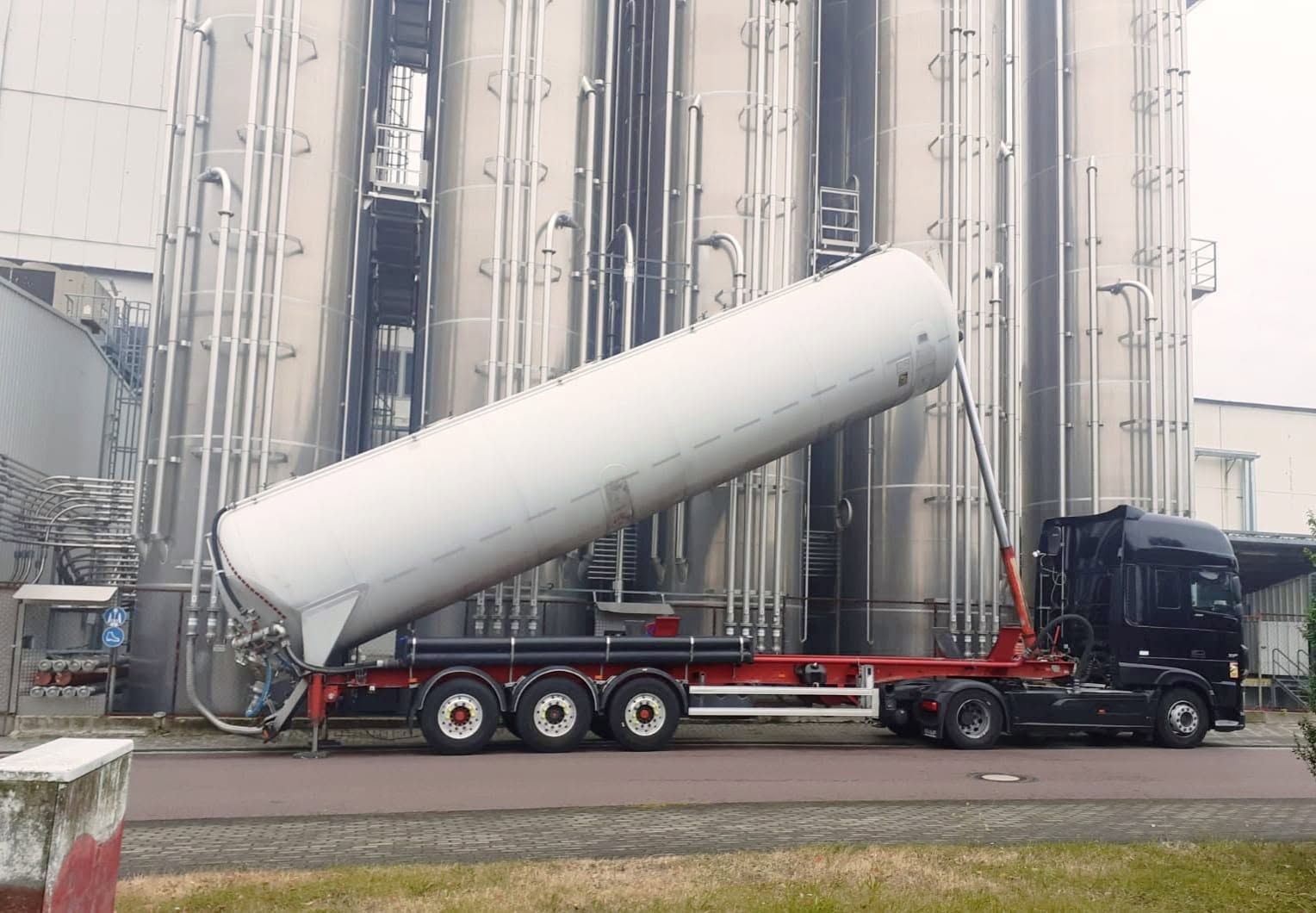
1. Integrity of packaging and chambers Before loading, the carrier checks the tightness of the silo trailer: the integrity of the manholes, seals, flange connections and discharge valves. The chambers must be clean — with no residue of the previous material that could contaminate the load and later be spilled at unloading.
2. Loading and unloading procedures Loading under the supervision of an operator; after the cycle — a visual check of the loading area for spilled pellets. Unloading with an analogous procedure: closing the ramps, cleaning the ends of the transfer hoses, a check after the cycle is completed.
3. On-board equipment Every silo trailer transporting pellets must have equipment for containing a potential spill: shovels, bags, brushes, collection containers. This equipment is subject to checks by the supervisory authority.
4. Risk management plan and documentation Every loading → transport → unloading cycle is documented. Spill incidents are reported immediately. The risk management plan is updated cyclically (typically annually) and audited at certification.
The three types of operator hit directly
Resin/recyclate producers (e.g. petrochemical plants, recyclers) — full certification almost always, because their volumes exceed 1500 tonnes/year.
Granule distributors/traders — depending on scale. Intermediaries handling >5 tonnes/year fall under the basic obligations; larger companies — full certification.
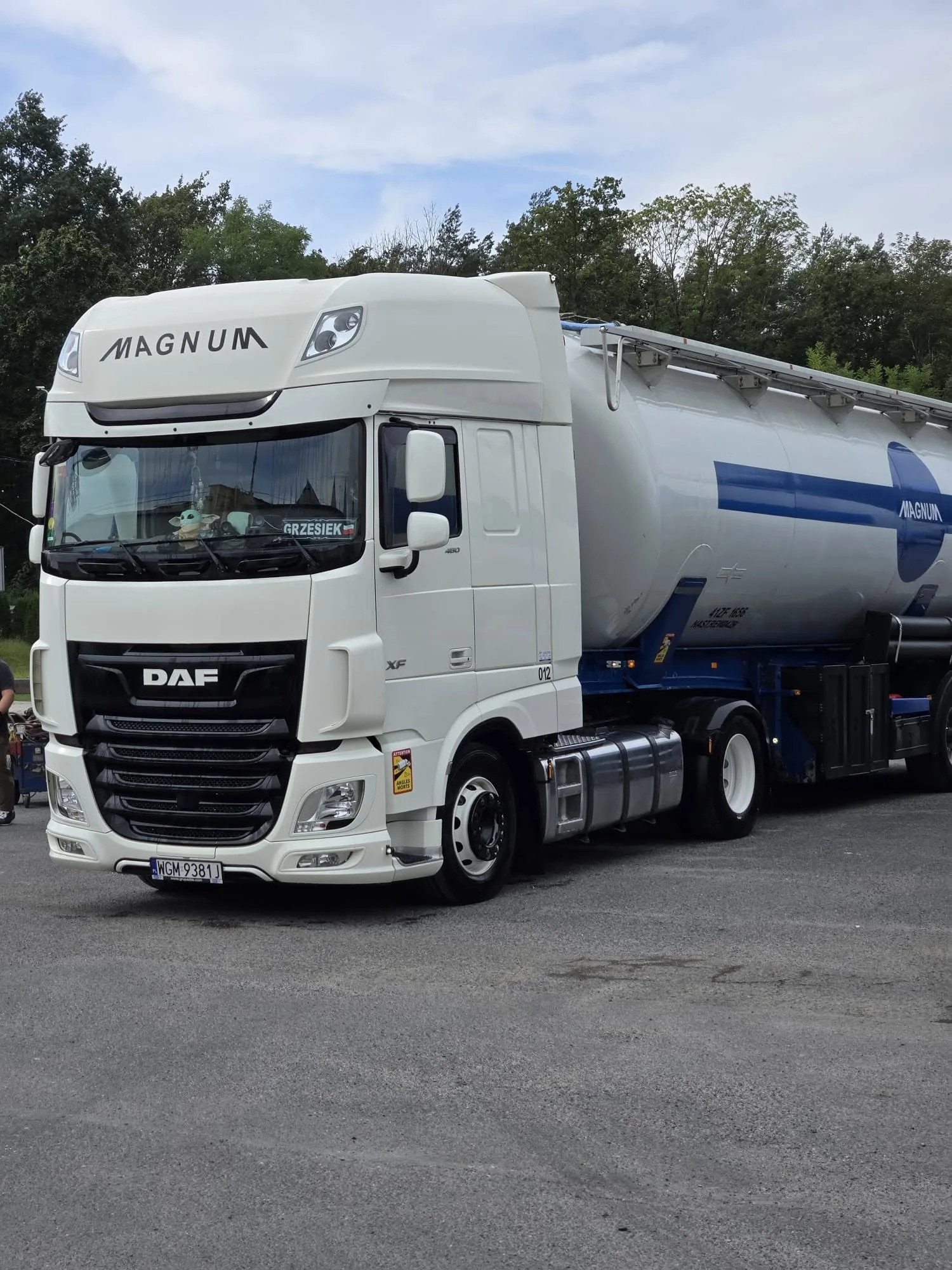
Specialist carriers (like PHS Magnum) — a fleet moving >1500 tonnes of granulate annually = certification required. Smaller occasional carriers — the basic handling obligations.
Implementation timeline
| Date | What starts to apply |
|---|---|
| 16.12.2025 | Selected provisions (definitions, general rules, monitoring) |
| 01.01.2026 | Obligation to report the loss of sea containers (IMO) |
| ~12.2027 | Full requirements: risk plans, procedures, equipment, certification |
| 2028 | First annual reports to the supervisory authorities |
| 2030 | Full system of penalties and supervision in the member states |
National implementation (Poland) — an implementing bill is in preparation; expected adoption 2026-2027.
What this means in practice for a granule shipper
If you ship PE, PP, PET or ABS granulate by silo — in 2026 start requiring from your carrier:
- Written confirmation of implemented PPLP procedures (realistically a contractual requirement in orders from January 2027)
- An OCS certificate or equivalent (for orders above 1500 tonnes per year with a single carrier)
- Containment equipment visible on the silo trailer (shovels, collection bags) — a visual check before loading
- Chamber cleanliness — a cleaning protocol after the previous load
- Cycle documentation — a loading protocol with a photograph of the site after the cycle
Carriers failing to meet the requirements from 2027 will be excluded from tenders by the larger shippers (the supply chain effect), regardless of the level of enforcement by state authorities.
Related
- PE and PP granule transport by silo trailer across the EU — what to know before booking a run
- Big-bag → silo trailer transloading — a process compliant with cleanliness procedures
- Silo trailer service — tightness and chamber integrity checks
About the author
This content was prepared by the PHS Magnum team in cooperation with Aleksy Pasternak — the company’s Managing Partner and an expert in bulk material transport with 35 years of experience in trading plastic granules, recyclates and industrial minerals across the EU. Aleksy publishes industry analyses on the expert portal pasternak.me , where you will find further studies on regulatory topics (PPLP, PPWR, OCS), technical topics (silo trailers, TDT) and operational topics (big-bag transloading, contract packing).