At a glance
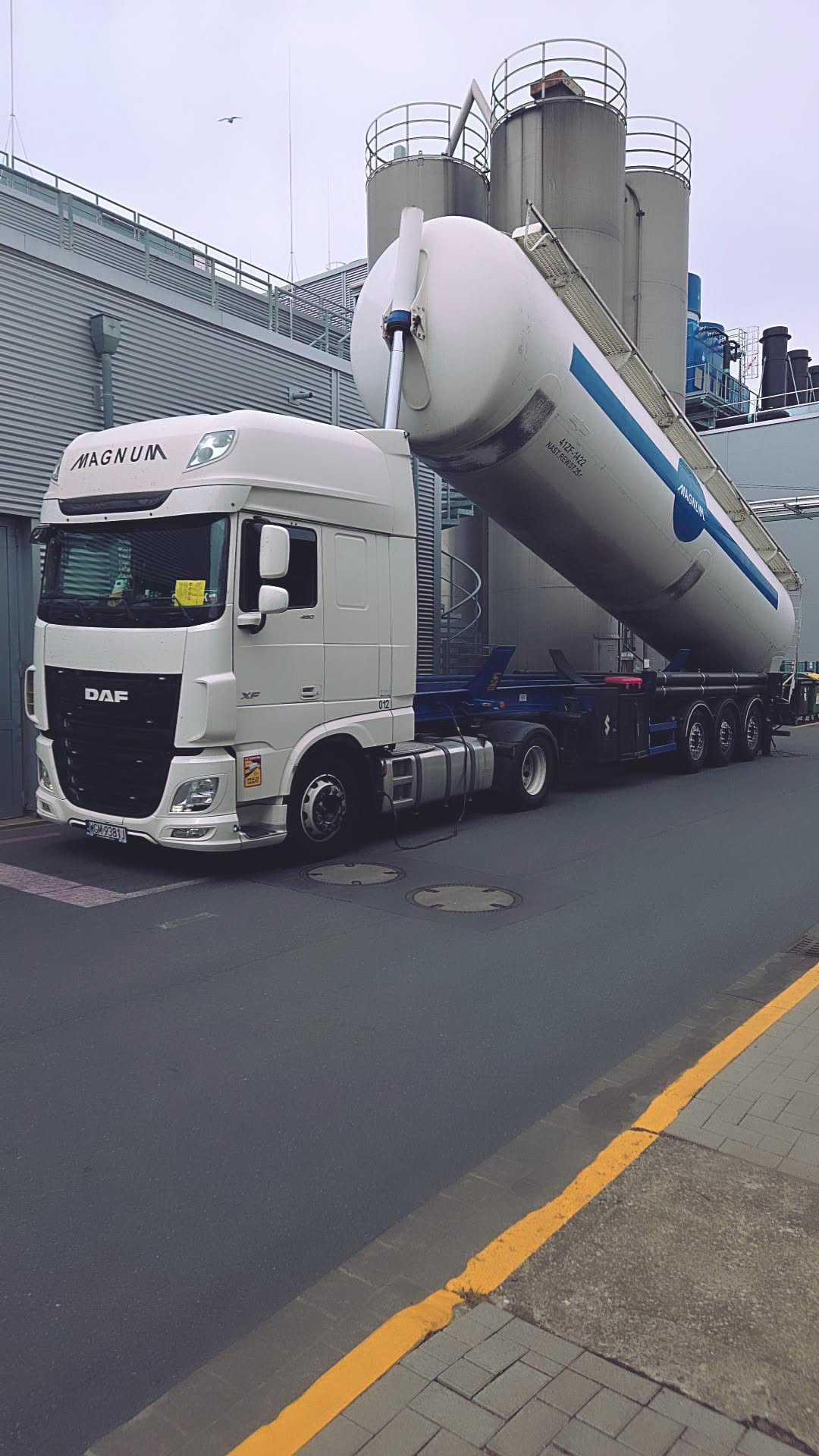
Recyclate transport (R-PET, R-HDPE, R-PP, R-LDPE) in 55–65 m³ silo trailers — the fastest-growing segment following PPWR 2026. A dedicated food-grade fleet, batch traceability, RecyClass procedures underway. Routes across Poland and the entire EU, ISO 9001:2015, base 4 km from the A4 (Gogolin junction).
How to order recyclate transport — step by step
From enquiry to discharge with full batch traceability:
- Enquiry — recyclate type (R-PET food/industrial, R-HDPE, R-PP, R-LDPE), tonnage, route, required traceability. Tel: +48 602 716 551.
- Trailer selection and quote — for food R-PET, a dedicated food-grade silo trailer with a tank cleanliness certificate.
- Loading — pneumatic; cargo temperature check (chemically recycled R-PET at 40–60°C).
- Carriage — dry transport (dry-air blow-through), routes across Poland and the entire EU.
- Unloading and documents — pneumatic discharge, CMR with batch number and PCR Content certificate.
Recyclate transport — the 2026-2035 growth segment
Recyclates (regranulates) are the fastest-growing segment of silo transport in the EU over the coming decade. The reason: PPWR 2026 mandates recycled content in plastic packaging — demand for regranulates is set to grow 5-10x by 2035.
PHS Magnum is preparing for this segment systematically: a dedicated food-grade fleet, RecyClass procedures and batch traceability.
The three kinds of R-PET — a key distinction
Mechanical R-PET (standard)
- Process: bottle sorting → grinding → washing → drying → regranulation
- Quality: ~90-95% of virgin
- Applications: non-food bottles, textile fibres, strapping
- Market price: below virgin
Food-grade R-PET (super-clean)
- Process: mechanical R-PET + a super-clean process (elevated temperatures, vacuum, decontamination)
- Quality: meets EFSA standards for food contact
- Applications: beverage bottles, food packaging
- Market price: at or above virgin (a segment with PPWR-driven demand)
Chemical R-PET (depolymerisation)
- Process: PET waste → chemical reaction (glycolysis, methanolysis) → monomers → repolymerisation → pellets identical to virgin
- Quality: 100% of virgin
- Applications: any virgin-PET application (including premium food-grade)
- Market price: initially above virgin (a young technology), with parity forecast for 2027-2030
Recyclate logistics requirements
Batch traceability
Critical: every recyclate batch carries:
- The batch number from the recycling plant
- The production date
- A recycled-content certificate (PCR Content — Post-Consumer Recyclate)
- A food-grade certificate (EFSA) where applicable
- A material certificate for the waste feedstock
At PHS Magnum, we enter this data into the CMR (or e-CMR from 2026) and hand it over to the customer.
Tank cleanliness certificate
Before loading food-grade R-PET, the shipper requires a document confirming:
- The history of the last 3-5 loads (must be food-grade only)
- The date and method of the last cleaning
- A visual tank inspection signed by the driver
- For dedicated silo trailers — the full history since the vehicle was purchased
A dedicated food-grade fleet
Selected silo trailers in our fleet of 31 units are dedicated exclusively to food-grade since purchase. They have never carried:
- Cement, lime or alkaline materials
- Industrial chemicals
- Materials with FR additives (flame retardants)
- Industrial non-food recyclates
A load-history certificate is available at the customer’s request.
Transporting warm cargo
R-PET from a chemical process can arrive at 40-60°C. Standard aluminium and stainless-steel silo trailers tolerate this temperature. The seals (EPDM, silicone) must be rated to 100°C.
The procedure: the shipper states the expected temperature at loading, the driver verifies it with a probe thermometer and records it in the documents.
Moisture
PET is hygroscopic — it absorbs moisture from the air. The consequences of moisture in R-PET:
- Hydrolysis during storage
- Degradation of mechanical properties
- Higher water content in the final packaging
The PHS Magnum procedure:
- Silo trailer blow-through with dry compressed air between cycles
- No wet washing without sufficient drying (24-48 h)
- Cargo drying at the receiving plant before use
Most common routes in 2026
These are typical examples — we deliver recyclates across the entire European Union.
From Polish recyclate producers to DE/AT/CZ
- Włocławek (Anwil) → bottle producers in Bavaria: 700-900 km, 9-12 h
- Brzeg Dolny (PCC) → recyclers in eastern Germany: 400-600 km, 5-8 h
- Plastics Recyclers Poland → packaging producers in Germany: 500-800 km, 7-11 h
From chemical recycling plants to Polish producers
- BASF ChemCycling Schwarzheide → customers in Poland: 400-500 km, 5-7 h
- BASF Ludwigshafen → customers in PL/CZ: 1,000-1,200 km, 14-16 h, a two-day cycle
- LyondellBasell Wesseling → customers in Poland: 900-1,000 km, 11-13 h
Within Poland
- Recycler → packaging producer: 200-500 km, 3-7 h
- Virgin producer → recycler (collection of production waste): 100-400 km