Introduction
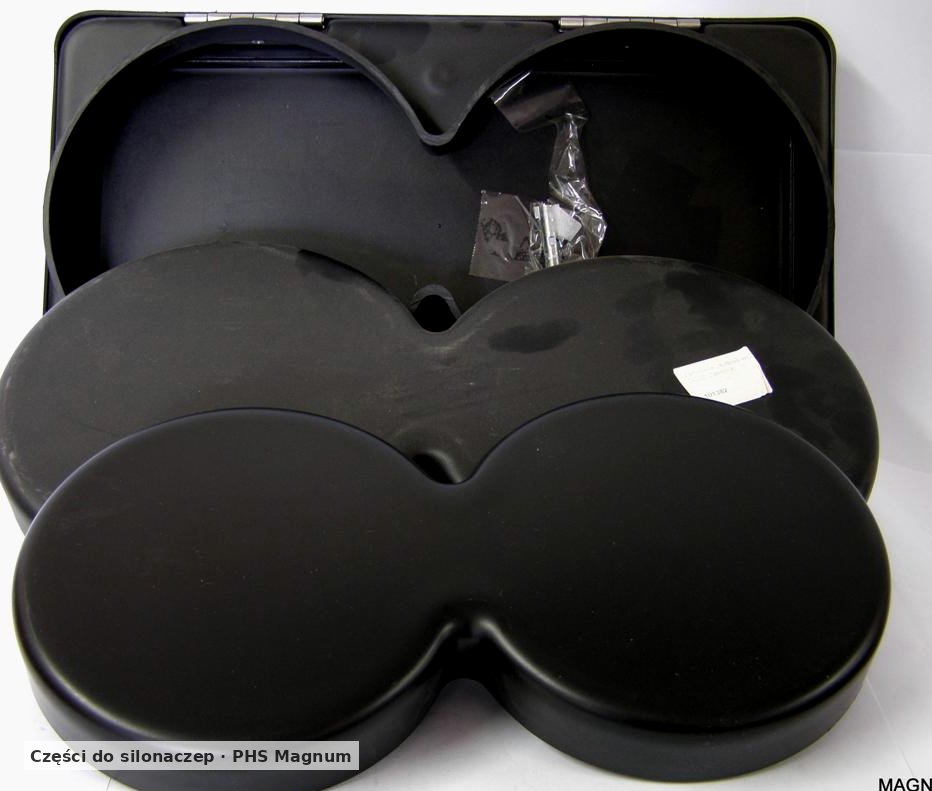
The hose locker is a compartment for discharge pipes and hoses mounted on the frame of a silo trailer — it carries the pneumatic hoses and pipes needed to unload bulk material at the consignee’s site. The locker inlet is closed with a cover or blanking cap, which keeps the pipes in place while driving and protects the interior from dust, water and dirt. It is a bodywork component related to carrying equipment, not part of the pneumatic line, but its absence or a crack quickly makes itself known: hoses get dirty and pipes risk falling out on the road.
Lockers differ in diameter and in the number of pipes they hold, and their covers are often similar across manufacturers — which is why we look at this category from the perspective of the entire fleet we serve. We keep the full range of DN160 and DN200 covers and blanking caps permanently in stock, in one-, two- and three-pipe variants, alongside hose container mountings and complete plastic container sets. This approach makes it possible to restore or complete the hose storage system on trailers of many makes from a single source.
Specification
The full range of covers, blanking caps, mountings and containers for hose lockers:
| Item | Version |
|---|---|
| Hose locker covers | DN160, DN200 — for one, two or three pipes |
| Hose locker blanking caps | DN160, DN200 — for one, two or three pipes |
| Hose container mountings | Feldbinder type, Spitzer type |
| Containers | complete plastic container sets |
Selection by diameter and number of pipes:
| Diameter | Variant |
|---|---|
| DN160 | for one, two or three pipes |
| DN200 | for one, two or three pipes |
Covers and blanking caps are matched to the locker diameter and the number of pipes it holds, while container mountings are matched to the bodywork type (Feldbinder or Spitzer). Complete plastic container sets complement the hose storage system where a container on the trailer frame is used instead of a tubular locker.
Compatibility with makes
Covers and blanking caps are selected by locker dimensions, not trailer make, so one range serves many manufacturers:
- Spitzer (SF/SK) — locker covers and blanking caps on the frame of aluminium SF and SK series trailers; container mountings in the Spitzer-type version.
- Feldbinder (EUT/KIP) — lockers on the frame of the EUT horizontal tank and the KIP tipping silo; container mountings in the Feldbinder-type version.
- Kässbohrer (K.SSK/K.SSL) — locker covers in the typical DN160 and DN200 diameters.
- Other makes — locker bodywork from various manufacturers is often similar, so the same range of covers, blanking caps and containers fits.
When ordering, the surest method is to state the locker diameter (DN160 or DN200) together with the number of pipes. If the designation is unknown, a measurement of the locker inlet and a photo of the bodywork are enough — on that basis we unambiguously select the matching component. For mountings and containers, the key is to identify the bodywork type (Feldbinder or Spitzer), so that the new component lands on the existing mounting points on the trailer frame.
Chorula warehouse
We run the warehouse of covers, blanking caps, mountings and complete hose containers in Chorula near Opole (4 km from the A4, about 180 km from the German border). Popular DN160 and DN200 sizes are usually available off the shelf, while less typical versions are sourced via direct delivery. We ship by courier across Poland, the European Union and the DACH market, and we also handle orders grouped with locker keys and locks. To select the right cover size, mounting and container for your trailer — ask for a quote, stating the locker diameter and the number of pipes.
Selecting covers in mixed-brand fleets
Locker covers and blanking caps are a category where the design similarity between manufacturers works in favour of a mixed-fleet manager. Tubular lockers on the trailer frame in DN160 and DN200, in one-, two- and three-pipe variants, are found on Spitzer SF/SK, Feldbinder EUT/KIP and Kässbohrer K.SSK/K.SSL bodywork — and the component is matched to the inlet dimension and the number of pipes, not to the tank make. Unlike pneumatic line equipment, the cover is a bodywork part related to carrying hoses, so its fit depends solely on the geometry of the compartment.
A certain difference only appears with hose container mountings. Spitzer and Feldbinder frame bodywork can differ enough in mounting points that we carry mountings in Spitzer-type and Feldbinder-type versions — and here identifying the bodywork type matters, because the new component must land in the existing holes. Covers and blanking caps, however, remain interchangeable between makes as long as the DN and the number of pipes match. On food-grade trailers — more often found on horizontal lines — a tightly closed locker has additional hygienic significance, as it protects the cleanliness of hoses that come into contact with the product.
We run the central warehouse in Chorula with this diversity in mind: popular DN160 and DN200 sizes are kept off the shelf, while mountings in both bodywork types and complete plastic containers are assembled from a single stock for the entire brand network. The network’s logistics make it possible to select and ship the cover, mounting and container in one order, without splitting it by trailer manufacturer.
What to watch for across makes
- Inlet dimension, not make — the cover is matched to DN160/DN200 and the number of pipes, common to Spitzer, Feldbinder and Kässbohrer.
- Container mounting type — here Spitzer and Feldbinder bodywork differ; identify the type to hit the mounting points.
- Food-grade — on food lines a tight closure has hygienic significance regardless of the manufacturer.
- Measurement instead of designation — when the locker designation is unknown, a measurement of the inlet and a photo of the bodywork are enough.
Specialist portals
More detailed guidance on selecting covers and blanking caps for specific makes is available on our specialist portals: Spitzer and Feldbinder .
Related categories
Author: Aleksy Pasternak — Managing Partner at PHS Magnum, 20 years in the industry, ISO 9001:2015 internal auditor (DEKRA).