In brief
TDT inspection for a silo trailer is mandatory every 3 or 6 years (depending on scope) and covers the pressure vessel, armature, safety valves, and calibration documentation. Rejection by the inspector means an operating ban and additional costs — so the key is preparation in advance: tank cleaning, replacement of worn armature, and collecting current calibration certificates. PHS Magnum in Chorula performs complete TDT preparation and organises the inspection with an inspector on-site at the workshop.
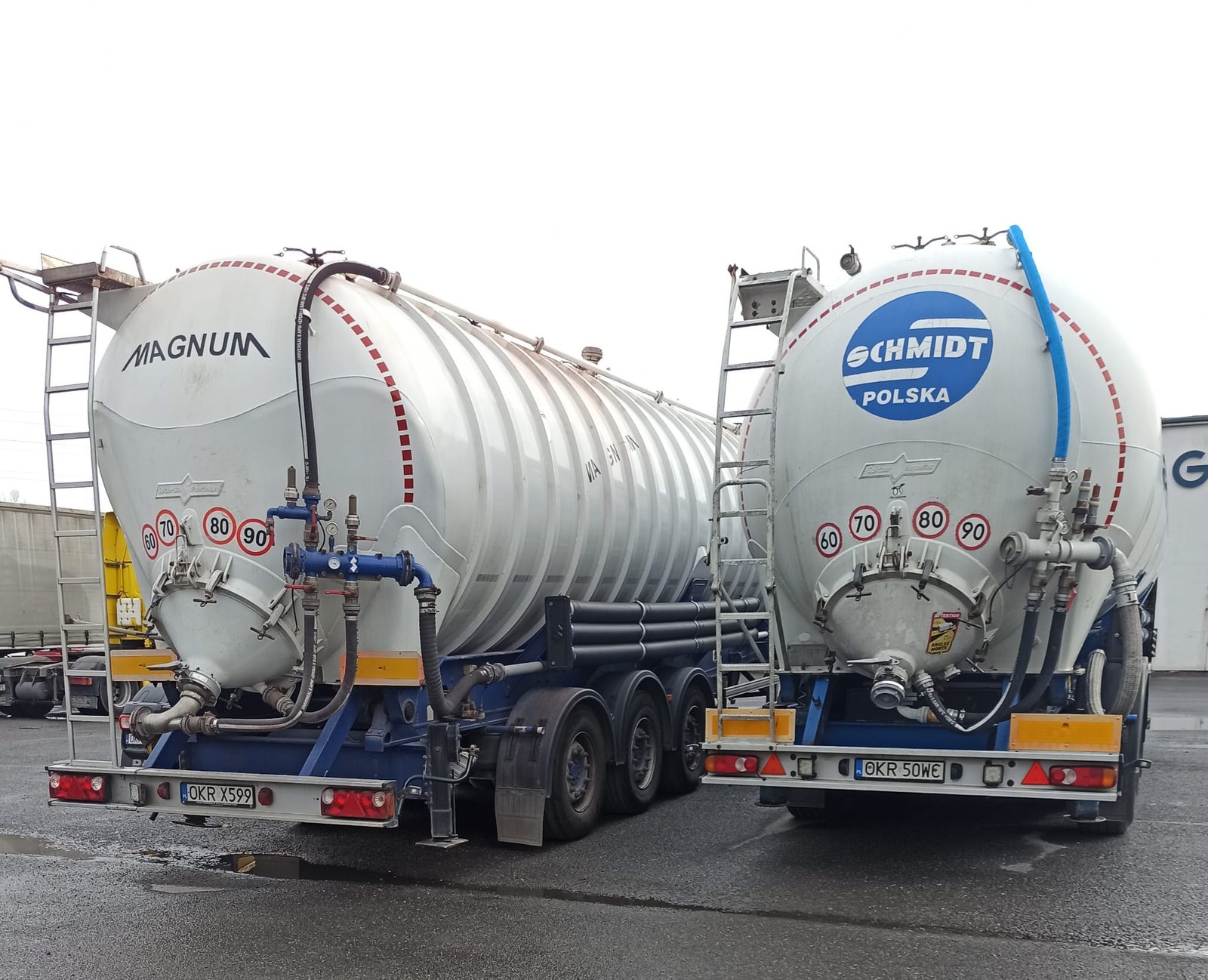
TDT inspection is one of those deadlines every silo trailer owner knows by heart. Rightly so — a vehicle without a valid inspector’s stamp cannot legally carry bulk materials under pressure. Yet every year trailers arrive at our workshop with owners caught off guard: “I thought there was more time.” The result? Downtime, rushed repairs, and nervous calls to dispatchers.
This guide explains step by step what to do so that the TDT inspection goes smoothly — and so the inspector leaves the workshop with a sticker attached, not a list of faults to fix.
What is TDT and why does it matter?
TDT — Transportowy Dozór Techniczny (Transport Technical Supervision) — is a Polish technical supervision authority, the road-vehicle equivalent of UDT (Office of Technical Inspection). It conducts mandatory inspections of pressure vessels mounted on semi-trailers and tankers.
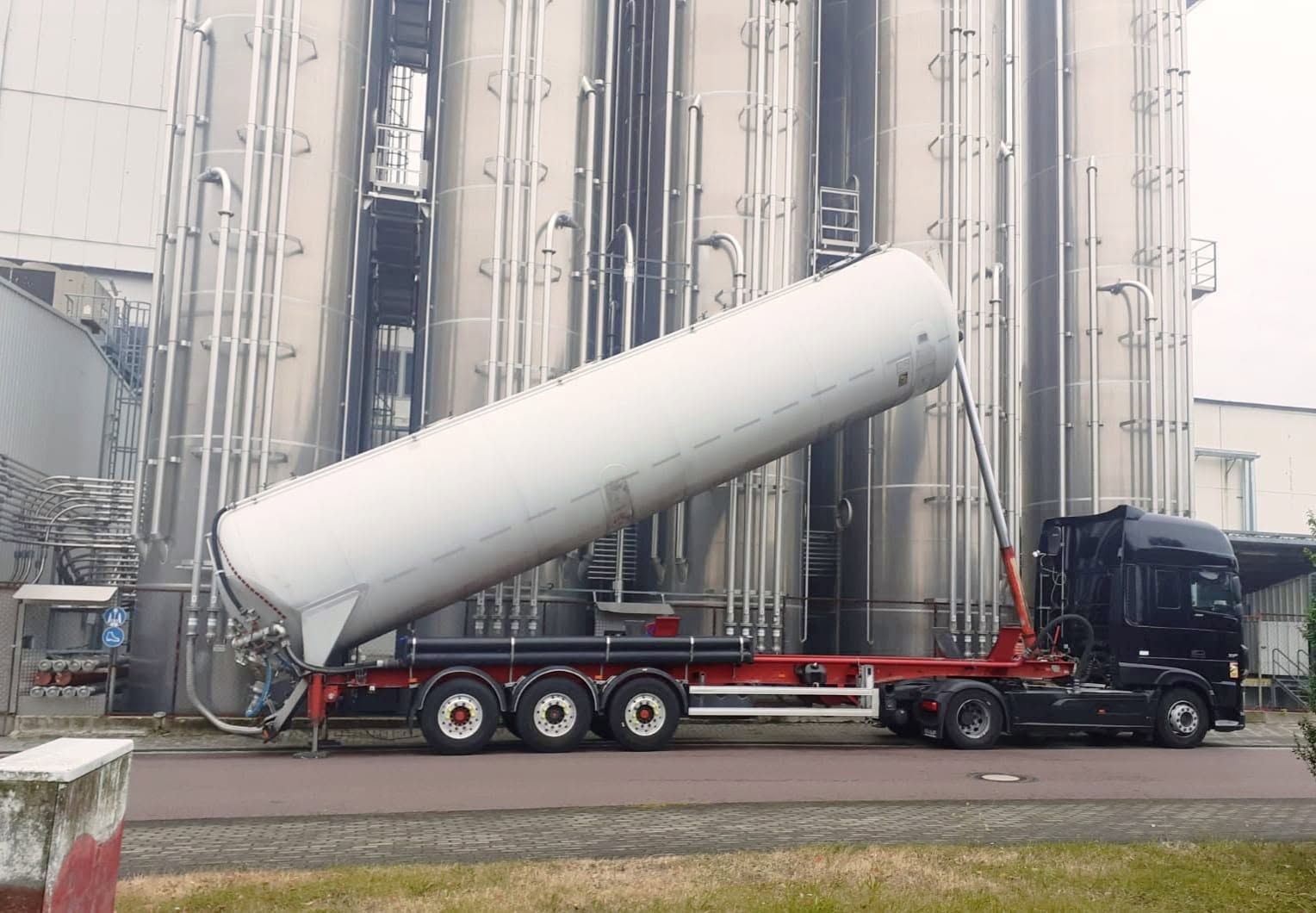
A silo trailer is a vehicle with a registered pressure vessel. During unloading of PE/PP granules or flour, overpressure of 0.5–2.5 bar is generated to push the material into the recipient’s silo. A pressurised vessel is a potential hazard — hence the oversight.
Consequences of an expired TDT inspection:
- Vehicle stopped by ITD (Road Transport Inspectorate) during a roadside check
- Prohibition from further travel
- Fine for the driver and carrier
- Civil liability in case of an accident (expired inspection = invalidated insurance)
Types of TDT inspection for silo trailers
TDT inspections come in two types with different frequencies:
| Inspection type | Frequency | Scope |
|---|---|---|
| External inspection | Every 3 years | External tank check, pressure test, armature, documentation |
| Internal inspection | Every 6 years | Same as external + tank opening, interior check, welds |
An internal inspection is more demanding — the tank must be completely emptied, cleaned, and accessible from inside. It also requires more workshop preparation time.
Pre-inspection checklist
1. Documents — gather in advance
- Tank inspection book — issued at initial vehicle registration, contains the full inspection history. Without it, the inspection cannot take place.
- Current pressure gauge calibration certificates — every pressure gauge on the trailer must have a valid calibration certificate (usually valid 1–2 years). If expired — send the gauge for re-calibration or replace it.
- Safety valve calibration certificates — like pressure gauges, safety valves must be calibrated and sealed.
- Tank CE documentation — factory certificates (usually in the inspection book).
2. Tank — physical preparation
The TDT inspector must see a clean tank — not only from the outside, but for internal inspections from the inside too.
What we do at PHS Magnum:
- Empty the tank of cargo residue
- Pneumatic interior cleaning
- Removal of lumps and deposits
- Inspection of internal coating condition (corrosion, scratches)
- Check and cleaning of inlets and outlets
3. Armature — what to check in advance
This is where TDT inspectors most often find faults. It’s worth checking each component before their arrival:
Safety valves: Must open at the correct pressure (as per documentation) and be sealed after calibration. A broken seal is an immediately disqualifying defect.
Ball and butterfly valves: No leaks when closed, smooth switching, no corrosion on the spindle. PTFE seals — replace if flattened or coated with deposits.
Pressure gauges: Current calibration (date on dial or label), no cracked housing, needle at zero without pressure.
Hoses and connections: No cracks, abrasion, or corrosion on fittings. Hoses past their service life — replace.
4. External tank — corrosion and welds
The inspector checks the external tank condition: corrosion, deformations, weld cracks. A rust patch on the tank is a warning sign — the inspector may require sandblasting and an assessment of corrosion depth.
PHS Magnum performs:
- Surface sandblasting before inspection
- Ultrasonic wall thickness measurement (particularly for pitting corrosion)
- On-site weld repairs
How does a TDT inspection proceed at PHS Magnum?
At PHS Magnum we organise TDT inspections on-site at the workshop — the inspector comes to Chorula. The procedure:
- Scheduling — we agree a date with the customer and schedule the TDT inspector (minimum 1–2 weeks notice)
- Vehicle intake — 1–3 days before inspection: cleaning, armature check, any minor repairs
- Inspection — inspector conducts the check (2–4 hours), pressure test
- Inspection book entry — if no faults: entry and sticker; if faults: list of corrections and re-inspection date
- Repair and re-inspection — if needed, we repair on-site and schedule a return visit from the inspector
Typical reasons for TDT rejection — and how to prevent them
From our service experience, the most common disqualifying defects are:
| Defect | Preventive action |
|---|---|
| Expired pressure gauge calibration | Check dates every 12 months, replace or re-calibrate |
| Damaged safety valve seal | Never touch seals; re-calibrate after every armature service |
| Corrosion on welds | Annual visual weld inspection; sandblasting every 3–5 years |
| Ball valve leaking when closed | Replace seal at every seasonal service |
| Missing inspection book | Keep in vehicle or with dispatcher — never send the trailer without it |
| Cracked pneumatic hose | Inspect hoses at every service — replace after 5–7 years |
When to start preparation?
3–4 weeks before inspection: Book a slot at PHS Magnum, gather documents, check calibration dates on pressure gauges and valves.
1–2 weeks before: Deliver the vehicle. We perform a pre-inspection and diagnose what needs repair. We order any missing parts.
2–3 days before: Final tank cleaning, last repairs, documentation assembly.
Day of inspection: Inspector conducts the check. With good preparation — finished the same day.
Summary
TDT inspection is not a problem for regularly serviced silo trailers — it’s a routine formality. The problem arises when maintenance between inspections is neglected.
If you want certainty that your silo trailer will pass without rejection — call us well in advance. Pre-inspection, armature repairs, tank cleaning, and scheduling the TDT inspector are all part of one complete package.
Tel: +48 602 716 551 | Roland Sobota (TDT inspections): +48 504 788 385
Related: TDT inspections · Silo trailer – service · Spitzer service · Feldbinder service