In Brief
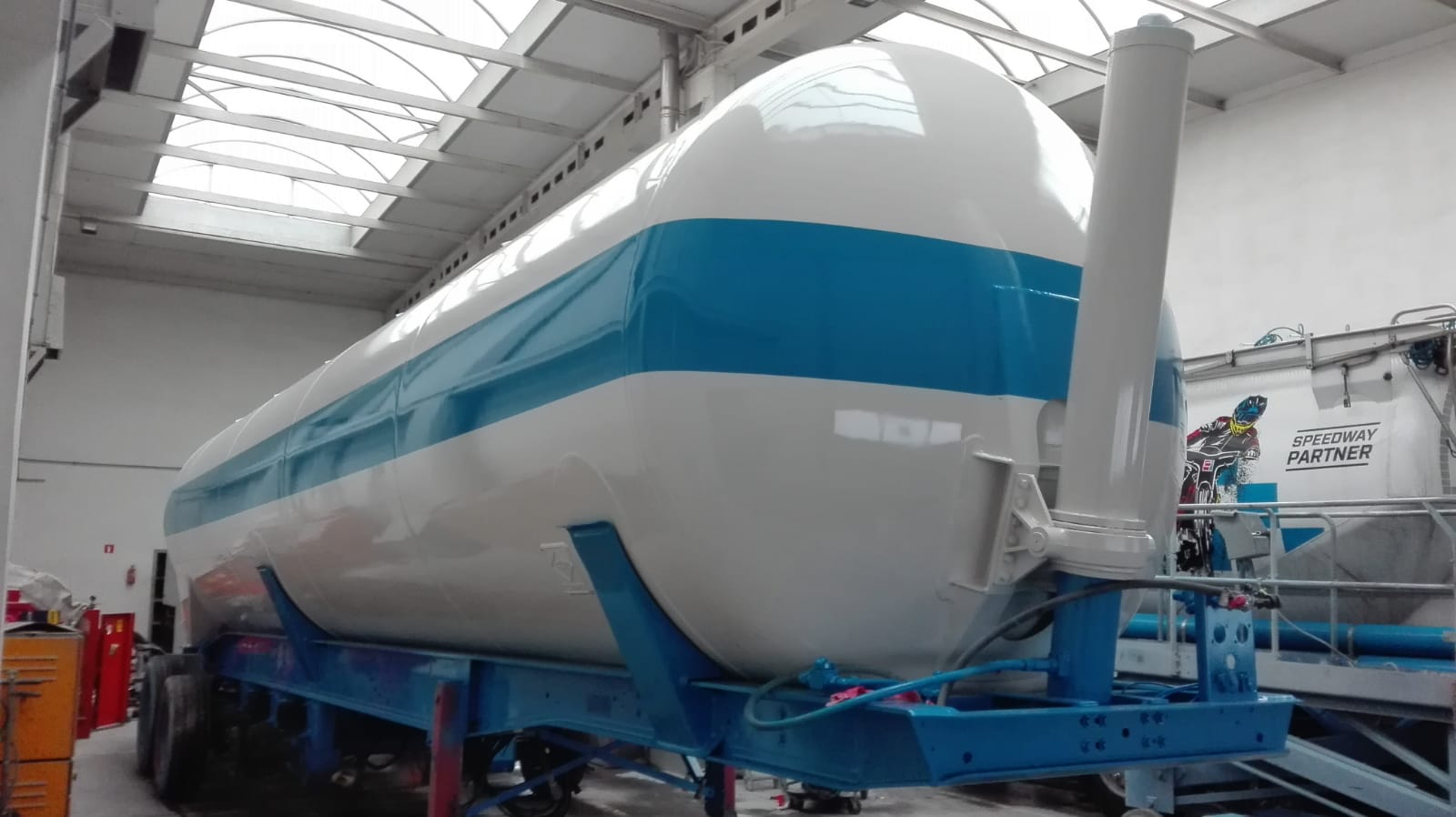
Full paint renovation: 5 stages — fitting removal, blast cleaning to Sa 2.5 (bare metal), epoxy primer within 2 hours, two coats of PUR 2K in RAL/NCS colour, reassembly with new gaskets and ADR markings. Durability: 8–12 years. Painting without Sa 2.5 blasting gives 2–4 years — a false economy. Lead time: 10–15 working days. PHS Magnum: own spray booth and blast hall in Chorula.
A fresh coat of paint on a silo trailer is not merely cosmetic. The coating system protects the tank structure from atmospheric corrosion, road salt, chemical spillage and mechanical abrasion. Done correctly, a renovation paint job extends trailer life by a decade or more. Done badly, it peels within two seasons and accelerates the corrosion it was meant to stop.
Stage 1 — Condition Assessment
Before any abrasive work begins, every weld seam, support bracket and structural joint is examined for cracks, pitting and active corrosion. Repairs must be completed before surface preparation — grit-blasting over a cracked weld embeds contamination in the new metal and the repair will fail under the paint.
Stage 2 — Disassembly
All components that must not be blasted or painted are removed: aeration units, pressure valves, electrical fittings, rubber seals, ladder fittings. This is not optional — masking alone is insufficient for large fittings and leaves hard-to-access edges poorly prepared.
Stage 3 — Surface Preparation
This is the stage that determines coating life. Industry standard for heavy transport equipment is Sa 2.5 (near-white blast cleaning per ISO 8501-1), which removes all mill scale, rust and old paint. Anything below Sa 2.5 — wire brushing, disc grinding or weak blast — dramatically shortens coating durability.
After blasting, the surface profile (roughness) must match the primer specification. Too smooth and the primer cannot anchor; too rough and peaks break through the top coat.
Stage 4 — Primer Application
Two-component epoxy primer is applied within the maximum interval specified by the paint manufacturer — typically four hours after blasting in clean, dry conditions. Exceeding this window allows surface oxidation to form, which the primer bonds to rather than to bare steel.
Primer thickness is measured with a dry-film gauge. Under-thickness leads to early corrosion; over-thickness can cause cracking at bends.
Stage 5 — Top Coat
Polyurethane or epoxy-polyurethane top coats are standard for silo trailers. They resist UV, fuel and road chemicals. Two coats are applied with a flash-off period between them. Colour match is verified against the owner’s specification before final application.
Stage 6 — Reassembly and Inspection
All fittings are reassembled with new seals where required. A final inspection checks for paint holidays (bare spots), runs and film thickness uniformity.
Why Professional Preparation Matters
The most common cause of premature coating failure is inadequate surface preparation — specifically blast grades below Sa 2.5 and priming after the window has elapsed. A professional workshop with a controlled blast chamber and metered drying conditions eliminates both risks.
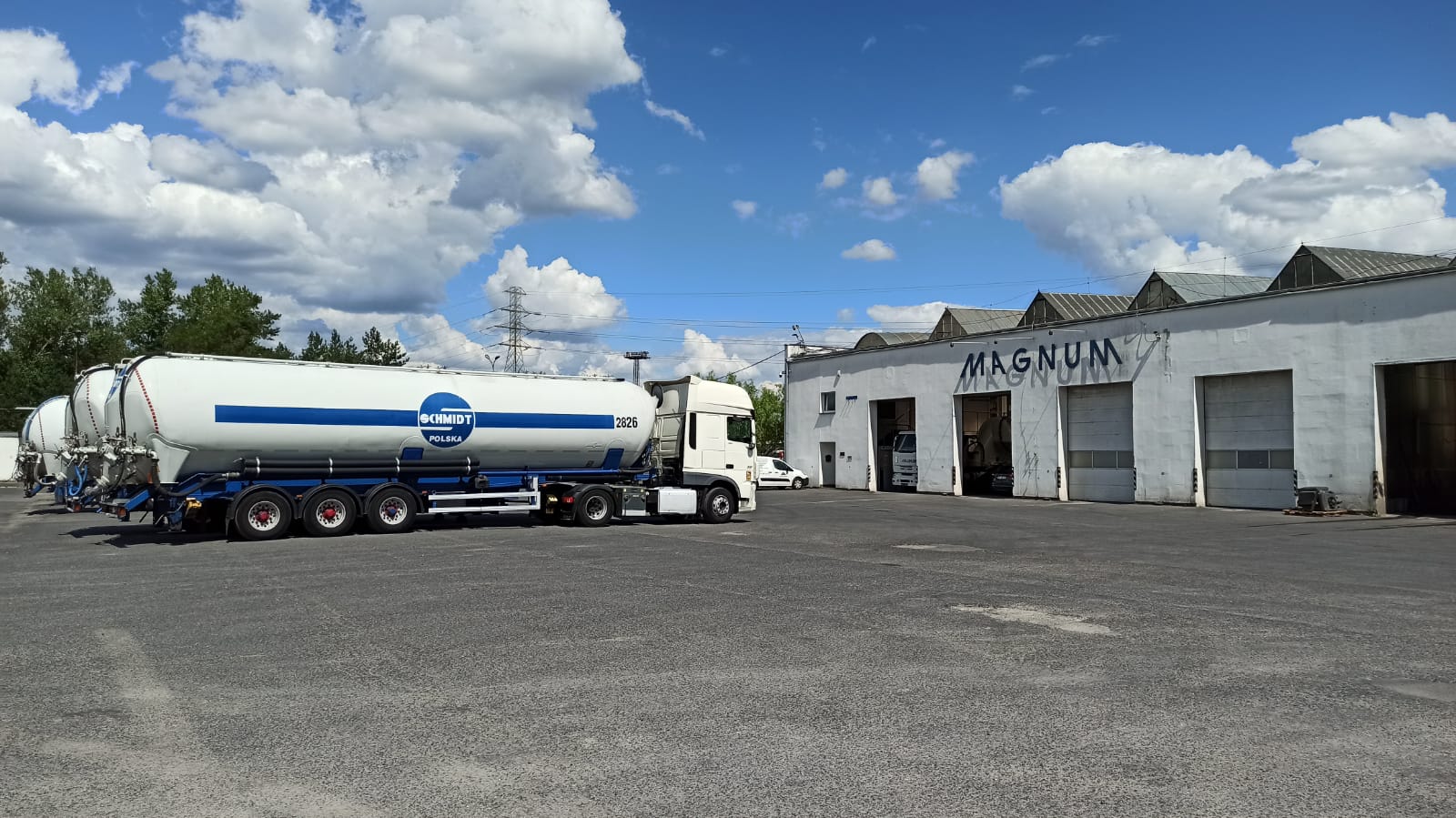
PHS Magnum carries out full renovation painting including structural repair, blast cleaning, primer and top coat application in our workshop in Chorula near Opole.
Related: Paint renovation service · Silo trailer service · TDT inspections