In brief
Regulation (EU) 2024/1157 on shipments of waste introduces a ban on plastic waste exports to non-OECD countries from November 2026. A stream of the order of 3-5 million tonnes per year must be processed inside the EU. Consequences for transport: growth in intra-EU shipments (shredded waste to recyclers, regranulate to packaging producers), a change in route profiles (fewer long runs to ports, more medium runs between plants), a premium for carriers with chain of custody certificates (RecyClass, ISCC). Poland — as a large importer of plastic waste from the EU and a country with developed recycling infrastructure — sits at the centre of the new arrangement.
What the regulation changes
The WSR in its current version (Regulation 1013/2006) has governed waste shipments since 2007 — mainly consent procedures, classifications (green/amber list), and bans on certain waste types to specific countries.
The new (EU) 2024/1157 introduces three structural changes:
A ban on plastic waste exports to non-OECD countries from 21 November 2026 — absolute, with a possible derogation of up to 5 years for selected countries that apply and meet waste management criteria.
Strengthened control over exports to OECD countries — a requirement of written consent from the receiving state for every shipment (the “prior informed consent” procedure).
Digitalisation of procedures — all waste shipment notifications mandatorily electronic from 2026-2027.
The scale of the phenomenon — how much waste stays in the EU
The EU generates about 25-30 million tonnes of plastic waste per year. Before the WSR reform:
- Recycling in the EU: ~10-12 million tonnes/year
- Incineration with energy recovery: ~10 million tonnes/year
- Landfilling: ~3-5 million tonnes/year (declining)
- Exports: ~3-5 million tonnes/year (mainly to Turkey, Vietnam, Malaysia)
Once the ban enters into force, the export stream must be “absorbed” by domestic infrastructure. Three paths:
- An additional 3-5 million tonnes/year to mechanical recycling (requires expansion of sorting and washing plants)
- Part to chemical recycling (a dynamically growing segment 2025-2030)
- Part to energy recovery (when physically unfit for recycling)
Each of these paths = new tonne-kilometres of transport inside the EU.
Three new transport segments that will grow
Segment 1: Sorted waste from the point of generation to the recycler
Stream: sorting plant → mechanical or chemical recycler. Material: PET flake, HDPE flake, PP regrind — waste that is already shredded, colour-sorted and polymer-specific.
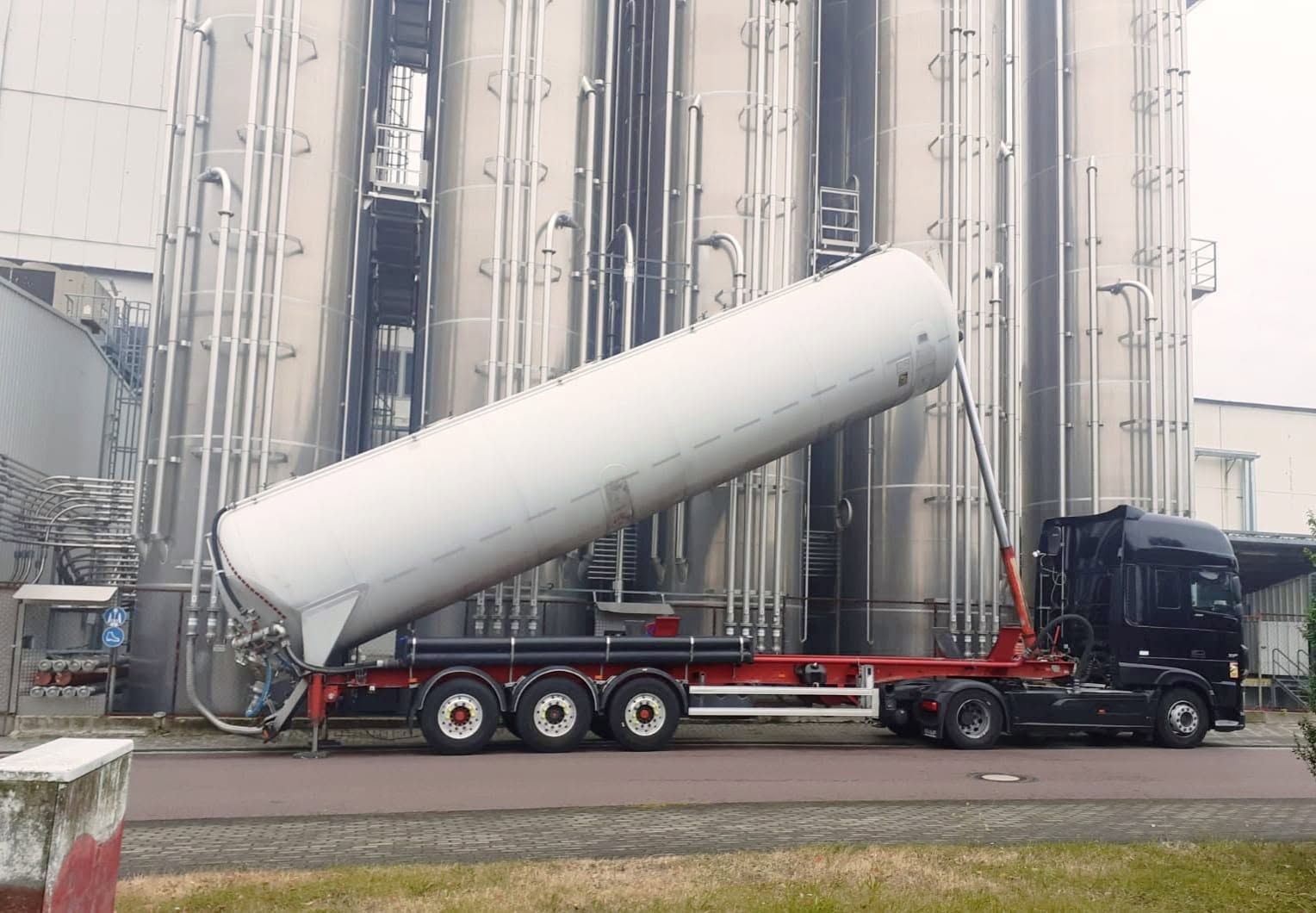
Transport type: lugger waste containers, walking floors, and on a smaller scale silo trailers (for materials that already flow as granules).
Distance: 200-800 km — mainly within countries, but a growing cross-border segment (Poland→DE, Czechia→DE).
Segment 2: Recyclate (regranulate) from the recycler to the packaging producer
Stream: recycler → bottle/film/crate producer. Material: R-PET pellets, R-HDPE pellets, R-PP pellets — full-value regranulate with a defined technical specification.
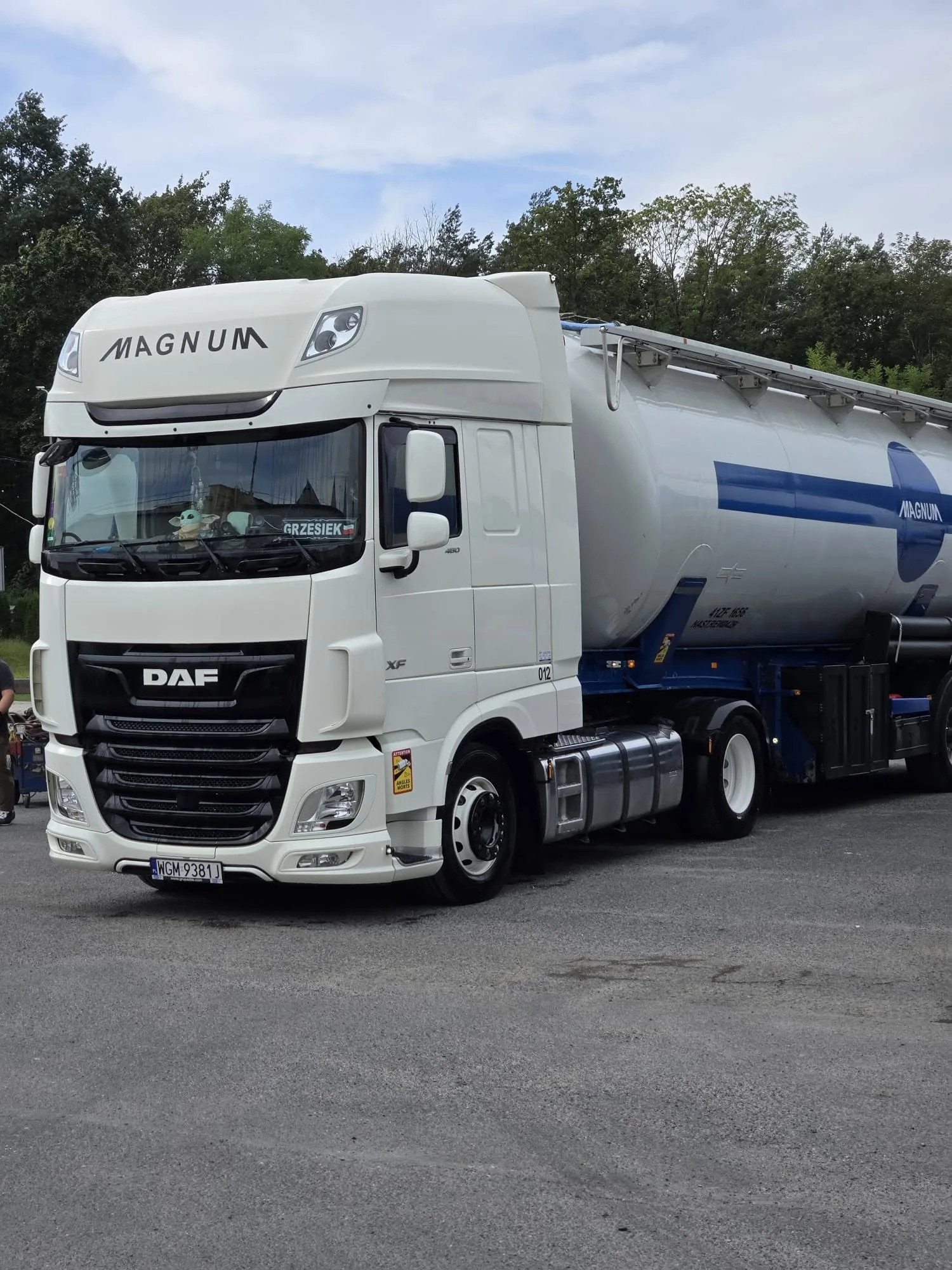
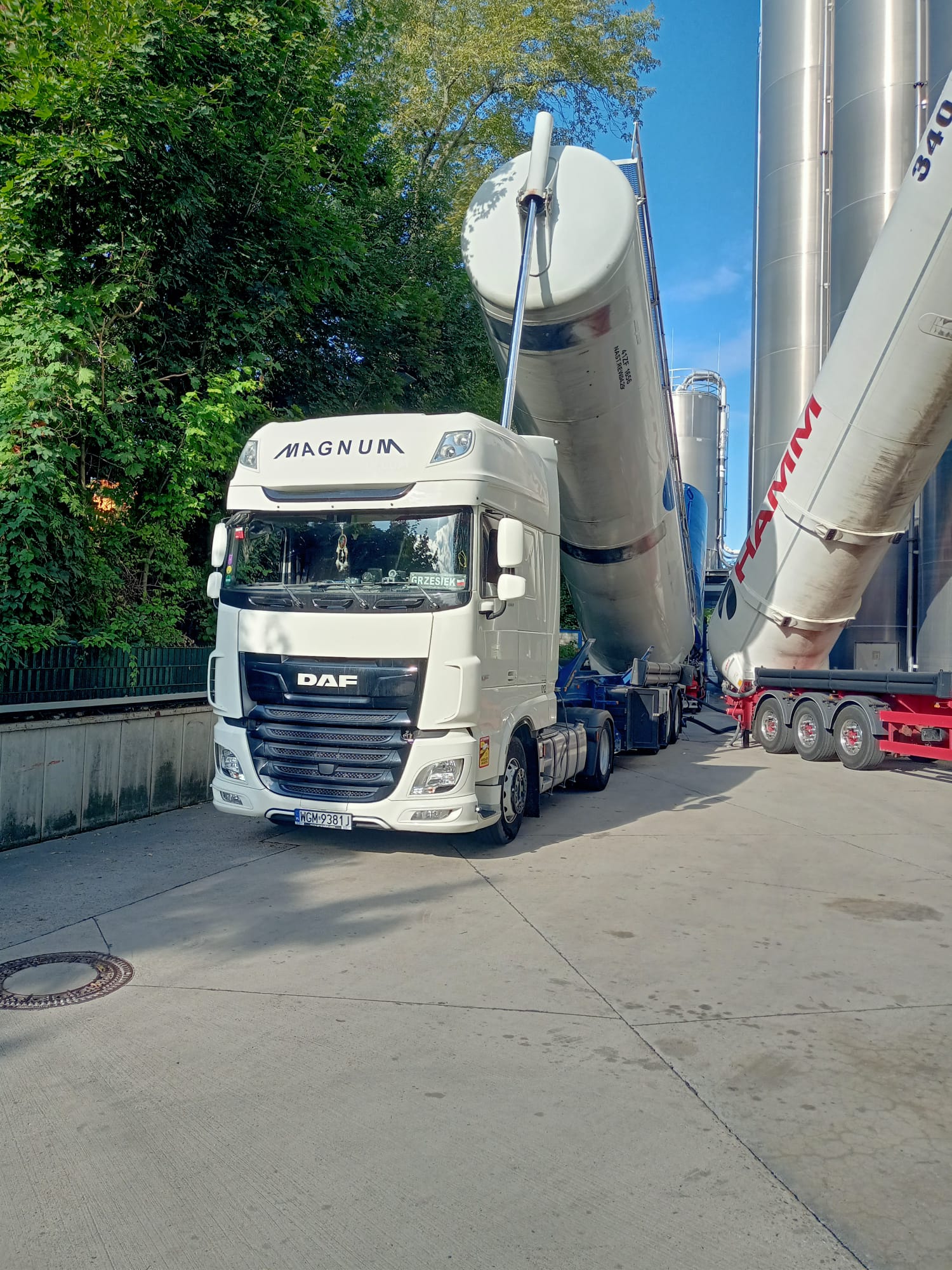
Transport type: pneumatic silo trailer — exactly as for virgin material.
Distance: 100-1,000 km. PHS Magnum with its Chorula base (4 km from the A4, 180 km from the DE border) — a natural transit location for PL→DACH routes.
Segment 3: Specialised waste for chemical recycling
Stream: mixed plastics sorting plants → pyrolysis / glycolysis / depolymerisation installations. Material: mixed polyolefin films, PET destined for depolymerisation.
Transport type: containers, in selected cases silo trailers for shredded materials.
Distance: 300-1,500 km — very long runs, because chemical recycling plants are few (Germany, Austria, the Netherlands).
The change in route profiles after November 2026
Before: significant waste traffic from deep within the EU (sorting plants in PL, IT, ES) → container ports (Rotterdam, Hamburg, Antwerp) → ships to Asia.
After: this traffic disappears. Replaced by:
- Shorter routes: sorting plant → domestic recycler (200-500 km)
- Medium routes: recycler → packaging producer in another EU country (500-800 km)
- Occasional long routes: specialised waste → chemical recycler in DE/AT/NL (1,000-1,500 km)
Overall: the number of tonne-kilometres in the EU grows, but the profile of a single run gets shorter. Shorter runs = higher rotation, a bigger role for intra-EU routes such as Poland↔DACH.
Poland — its position in the new arrangement
Poland:
- 2nd place in the EU for the amount of plastic waste imported (after Germany) — before the ban
- Developed mechanical recycling infrastructure (PCC, BoryszewERG, Plastics Recyclers Poland, a regional base of recyclers)
- A growing chemical recycling base (Anwil, BASF and LyondellBasell projects starting 2024-2026)
- Geography: 180-300 km to most consignee plants in DE/AT/CZ
Conclusion: after November 2026 Poland becomes the main regranulate supplier for DACH. Silo trailer transport between Poland and Germany/Austria/Czechia — the segment with the highest growth dynamics in the industry.
What to plan — for shippers and carriers
For shippers (packaging producers, the food industry, distributors)
- Start talks with recyclate suppliers in the EU — the supply chain will get shorter, but prices will rise along with PPWR demand
- Define your preferences: do you want recyclate of a specific origin (e.g. PL with a RecyClass certificate)?
- Secure a partnership with a certified carrier (OCS, RecyClass) — from 2027 it will command a premium
For carriers
- Implement OCS certification (required at throughput >1,500 tonnes/year from 2027)
- Implement RecyClass / ISCC PLUS (recyclate supply chain traceability)
- Dedicate part of the fleet to food-grade (the highest-valued segment)
- Build relationships with recyclers and packaging producers in DACH
Related
- PPWR 2026 — impact on demand for R-PET, R-HDPE, R-PP recyclate transport
- EU 2025/2365 — Pellet Loss Prevention. What the regulation changes for granulate shippers
- Operation Clean Sweep (OCS) — certification of a silo trailer carrier
- Poland as Europe’s logistics hub for bulk materials
About the author
This content was prepared by the PHS Magnum team in cooperation with Aleksy Pasternak — the company’s Managing Partner, a bulk material transport expert with 35 years of experience in trading plastic granulates, recyclates and industrial minerals in the EU. Aleksy publishes industry analyses on the expert portal pasternak.me , where you will find further studies on regulatory topics (PPLP, PPWR, OCS), technical topics (silo trailers, TDT) and operational topics (big-bag transloading, repackaging).