In short
The Risk Management Plan (RMP) is a mandatory document for every operator handling more than 5 tonnes of plastic pellets per year under Regulation (EU) 2025/2365 (PPLP). Above the 1,500 tonnes/year threshold, independent certification of compliance (Operation Clean Sweep Europe) is required. The document identifies leakage risk points at every operational stage (loading, transport, warehousing, unloading, cleaning), and describes control procedures, staff training, and an incident reporting system. Implementation time: 6–12 months depending on the starting baseline. Updates: annually and at every significant operational change.
The structure of a standard RMP
A full Risk Management Plan compliant with the PPLP and OCS Europe contains seven chapters:
1. Scope and policy
- Identification of the company and the locations covered by the plan
- A pellet loss management policy (a board declaration)
- Responsibility (people and roles, who answers for what)
- Internal and external communication
2. Hazard identification
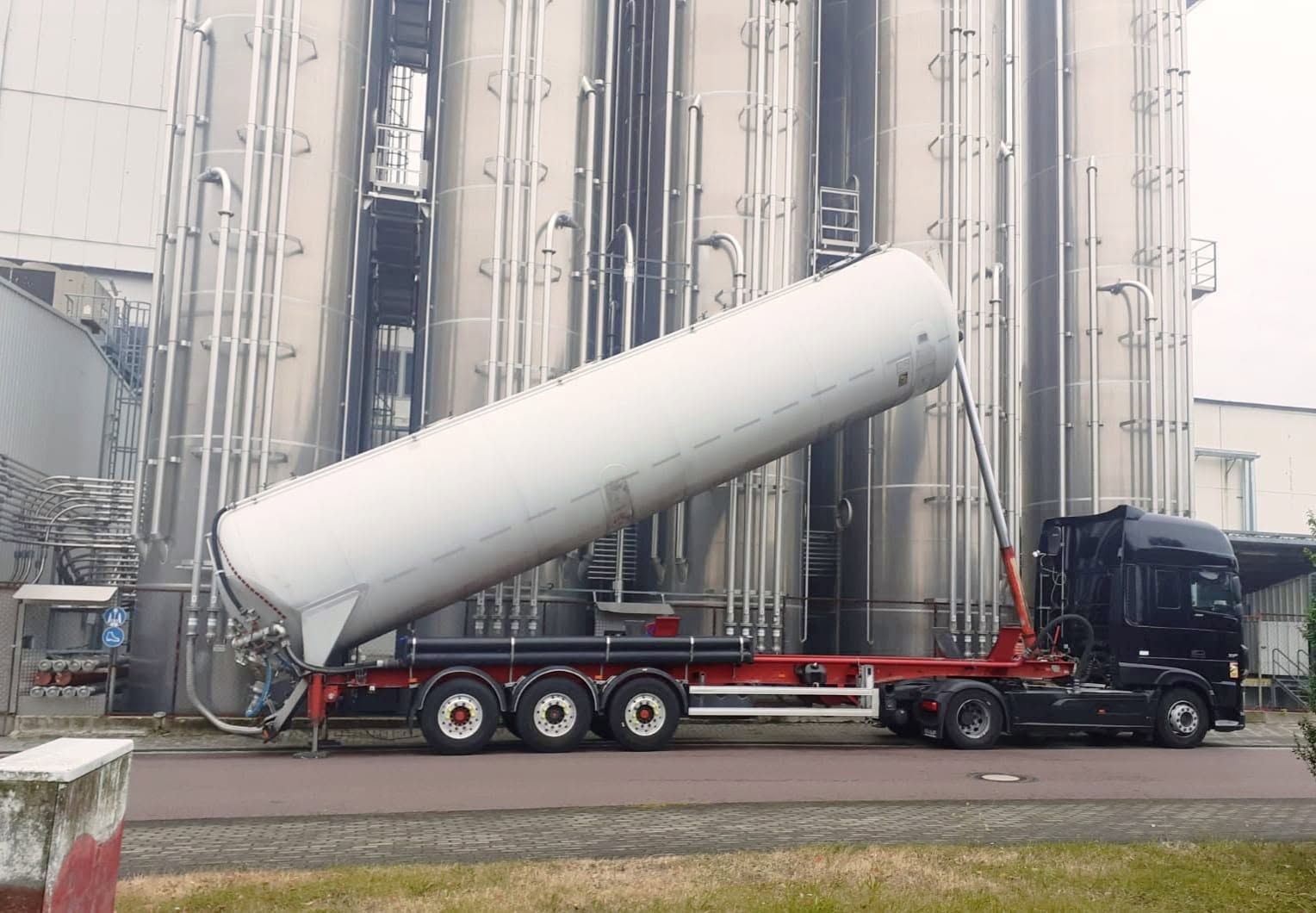
A full map of the company’s processes with identification of leakage risk points (LRPs). For a typical silo trailer haulier:
Point 1: Loading at the shipper
- The loading pipe disconnected from the silo trailer → pellet residue falls
- The top manhole not closed properly → leakage en route
- A leaking discharge valve → leakage en route
- The shipper’s operator does not notice spills around the silo trailer
Point 2: Transport en route
- Vibration loosens valves or manholes
- Shocks (e.g. potholes) squeeze out small quantities of pellets
- Cracked aeration pads
- Collision, accident
Point 3: Unloading at the recipient
- Opening the valve generates air fountains — airborne pellets can spread
- Pipe connections — tightness
- Load residue after discharge is finished (a few kilograms in the chamber)
Point 4: Cleaning the silo trailer
- Blow-through — pellets blown out as pneumatic waste
- Wet washing — pellets remain in the water
- Drying
Point 5: Warehousing (if the operator stores pellets)
- Big-bags of pellets damaged in transit
- Opening a big-bag in the warehouse — minor spillage
- Palletised bags of pellets
For each LRP: an assessment of probability of occurrence (low/medium/high) × severity of consequence (small spills / medium / large).
3. Operational procedures
For each LRP — a detailed procedure reducing the risk. An example for the “Loading at the shipper” point:
PROCEDURE OP-001: Loading a silo trailer at the shipper
Purpose: Prevent pellet spills when disconnecting the loading pipe.
Responsibility: Silo trailer driver + the shipper's loading operator.
Steps:
1. Before loading — visual check of the silo trailer's condition.
2. After connecting the pipe — check the clamp for tightness.
3. Loading supervised by the driver or the operator.
4. After loading is complete — close the silo trailer valves.
5. Disconnect the loading pipe with a collector guard underneath it.
6. Check the area under the silo trailer — collect any spills.
7. Entry in the cycle register.
Documentation: Cleanliness certificate, CMR with a photo, register entry.
For a typical operator — 15–30 such procedures. Each numbered, with an assigned owner (responsible person) and the date of last update.
4. Equipment and infrastructure
A list of equipment at every location and on every vehicle:
- Cleaning points at loading zones (pressure washers, water separators)
- On-board equipment on silo trailers (scoops, bags, funnel, straps)
- Wind protection in outdoor zones (collection gutters, grates)
- Lighting systems (visual checks at night)
Plus an inspection and maintenance schedule for each item.
5. Staff and training
- A list of positions handling pellets
- Training requirements per position (content, frequency, knowledge verification)
- A training register (dates, names, trainer and participant signatures)
- An onboarding procedure for new employees (1–3 months of mentoring)
Example: a silo trailer driver must complete initial training (8 h theory + 4 h practice) and an annual refresher (4 h). A verification test — 80% required to pass.
6. The incident reporting system
- Definition of reportable events (every spill ≥1 kg or ≥100 pellets)
- The reporting procedure (from the driver → dispatcher → H&S coordinator → management)
- Reporting deadlines (typically: immediately to the dispatcher, an electronic report within 24 h)
- A report archive (5–10 years)
- Systemic analysis — a cyclical review of reports, identification of recurring causes, procedure corrections
7. Review and continuous improvement
- RMP review frequency (typically annual)
- The RMP update procedure
- Internal audits (quarterly or semi-annual)
- External audit — OCS Europe (typically every 3 years, with annual surveillance audits)
- Performance indicators (KPIs): incidents/year, quantity of spilled pellets/year, response time, training attendance
Critical RMP mistakes — what the auditor rejects
From the experience of the first OCS Europe audits (2025–2026):
1. The RMP as an unpersonalised template The auditor quickly sees the document is a copied template — no specific locations, no specific names, no specific numbers. Result: a non-conformity, rework required.
2. An RMP disconnected from operational reality Procedures exist on paper, but when the auditor enters the site — the driver does not know the procedures, the equipment is missing, the cycle register is empty. Result: a critical non-conformity.
3. No training register Procedures state that staff are trained, but there is no documented register. The auditor has no basis to verify — a non-conformity.
4. No systemic analysis of reports Incident reports are archived, but there is no periodic review and no conclusions drawn. The auditor asks: “What conclusions did you draw from the last 12 months of reports?” The answer “none” → a non-conformity.
5. Incomplete or missing on-board equipment The audit often includes checking several silo trailers from the fleet. Missing scoops, unavailable bags, illegible instructions → a non-conformity.
6. An RMP review cycle that is too long “Updated every 3–5 years” does not meet the PPLP requirement. The OCS Europe standard: at least annually, plus at every significant change.
An RMP implementation schedule — an example for a haulier
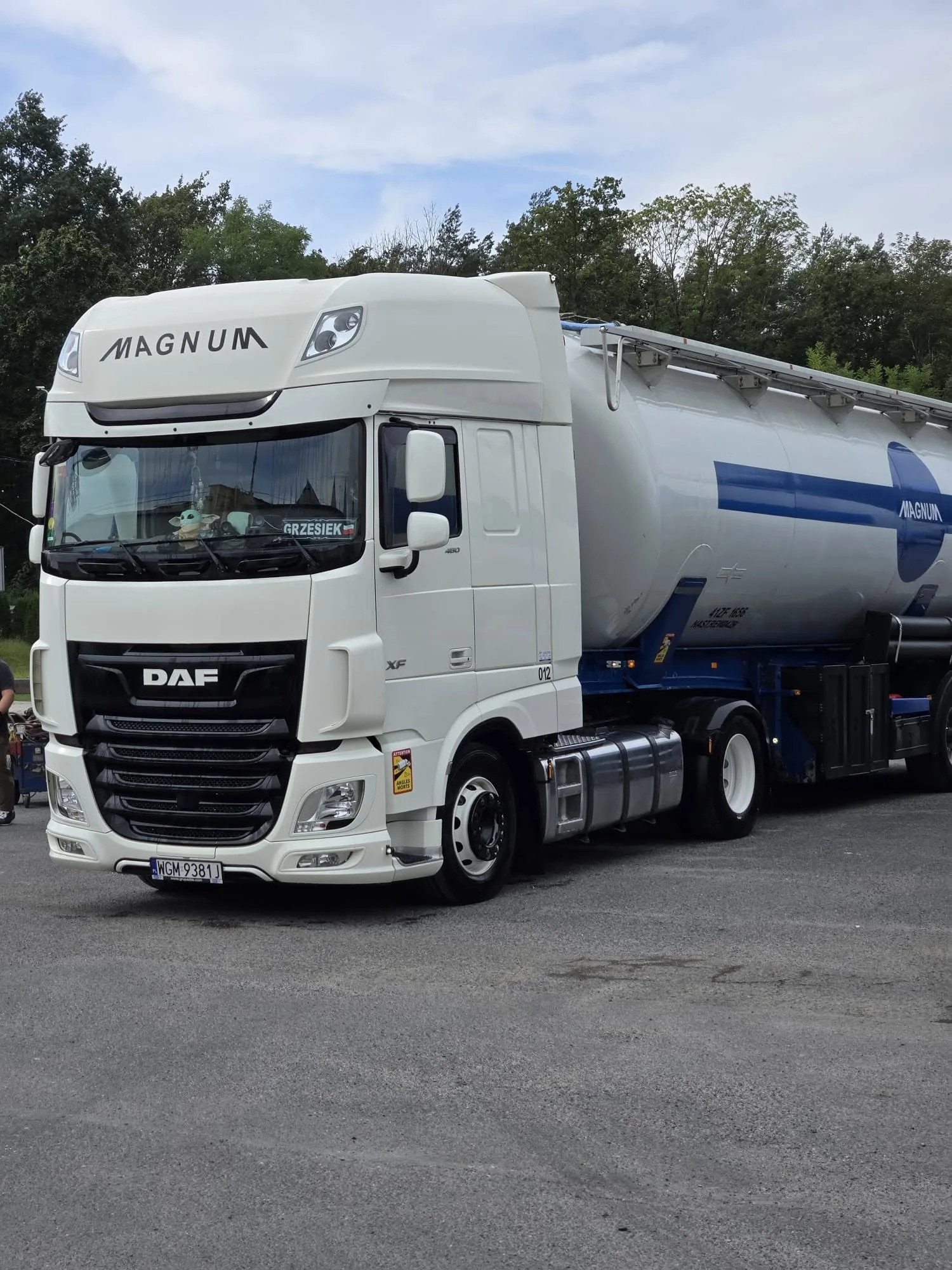
Assumptions: a company with ISO 9001 (DEKRA), 26 DAF tractor units, 31 silo trailers, pellet turnover of roughly 10–20 thousand tonnes/year (PHS Magnum).
| Month | Actions |
|---|---|
| M1 | Board decision, appointment of the implementation team |
| M2 | Process mapping and LRP identification (a workshop with a consultant, optionally) |
| M3 | Writing operational procedures for each LRP |
| M4 | Purchase of missing on-board equipment (scoops and bags for the whole fleet) |
| M5 | Training of all drivers (a 2-week cycle) |
| M6 | Training registers, cycle registers, the incident reporting system |
| M7 | Internal audit |
| M8 | Corrections based on the internal audit |
| M9 | Pre-audit by an external consultant |
| M10–11 | Corrections based on the pre-audit |
| M12 | OCS Europe certification audit |
| M13+ | Cyclical surveillance audits (annual) |
A 12-month implementation is realistic for a company with an ISO 9001 baseline. Without ISO — 15–18 months.
What PHS Magnum offers pellet shippers
For pellet shippers looking for a haulier ready for the PPLP era:
- ISO 9001:2015 (DEKRA, certificate current) as the base of the quality management system
- Risk Management Plan procedures being implemented in line with the PPLP and OCS Europe
- On-board equipment on every silo trailer (scoops, bags, funnel)
- Driver training in PPLP procedures (since 2025)
- A cycle register system — documentation of every loading, transport, and unloading
- OCS Europe certification in progress — first audit scheduled for Q3–Q4 2026
Certification status is available to counterparties on request: biuro@magnumchorula.pl , +48 602 716 551.
Related
- Operation Clean Sweep (OCS) — haulier certification
- PPWR 2026 — demand for R-PET, R-HDPE, R-PP recyclate transport
About the author
This content was prepared by the PHS Magnum team in cooperation with Aleksy Pasternak — Managing Partner of the company and a bulk material transport expert with 35 years of experience in trading plastic pellets, recyclates, and industrial minerals in the EU. Aleksy publishes industry analyses on the expert portal pasternak.me , covering regulatory topics (PPLP, PPWR, OCS), technical topics (silo trailers, TDT), and operations (big-bag transloading, contract packing).