In short
Mechanical recycling is the dominant plastic recycling technology — sorting, grinding, washing, regranulation. Chemical recycling is the newer technology, breaking polymers down into monomers and repolymerising them into pellets of 100% virgin quality. Both types travel in pneumatic silo trailers, but they differ in: scale (mechanical — large, chemical — growing), geographic reach (mechanical — regional, 100–500 km; chemical — continental, 500–1,500 km), certificate requirements (chemical is food-grade EFSA as standard), and routes (mechanical in every EU country, chemical — concentrated in DACH and NL). After the PPWR in 2026, both types see strong demand, but their transport plays different roles in the supply chain.
Mechanical recycling — how it works and what transport it generates
The process:
- Collection and sorting — the stream of plastic packaging from households and industry passes through a sorting plant (MRF — Material Recovery Facility). Automatic sorting (NIR — Near InfraRed) into polymer-specific streams: PET, HDPE, PP, LDPE, PS.
- Grinding — packaging is mechanically shredded into flake (5–15 mm).
- Washing — removal of labels, glue, and organic contamination. Requires significant water and energy.
- Drying — moisture evaporation to <0.2%.
- Regranulation — flake enters an extruder, is melted, filtered, and regranulated into pellets.
Final product: regranulate pellets (R-PET, R-HDPE, R-PP, R-LDPE) of a technical quality at 90–95% of virgin material.
Transport characteristics of mechanical recycling:
- Sorting plants — dispersed across every district/region (municipal waste management)
- Mechanical recyclers — many in every EU country (local to medium scale)
- Routes: typically 100–500 km between sorting plant and recycler; 300–800 km between recycler and packaging producer
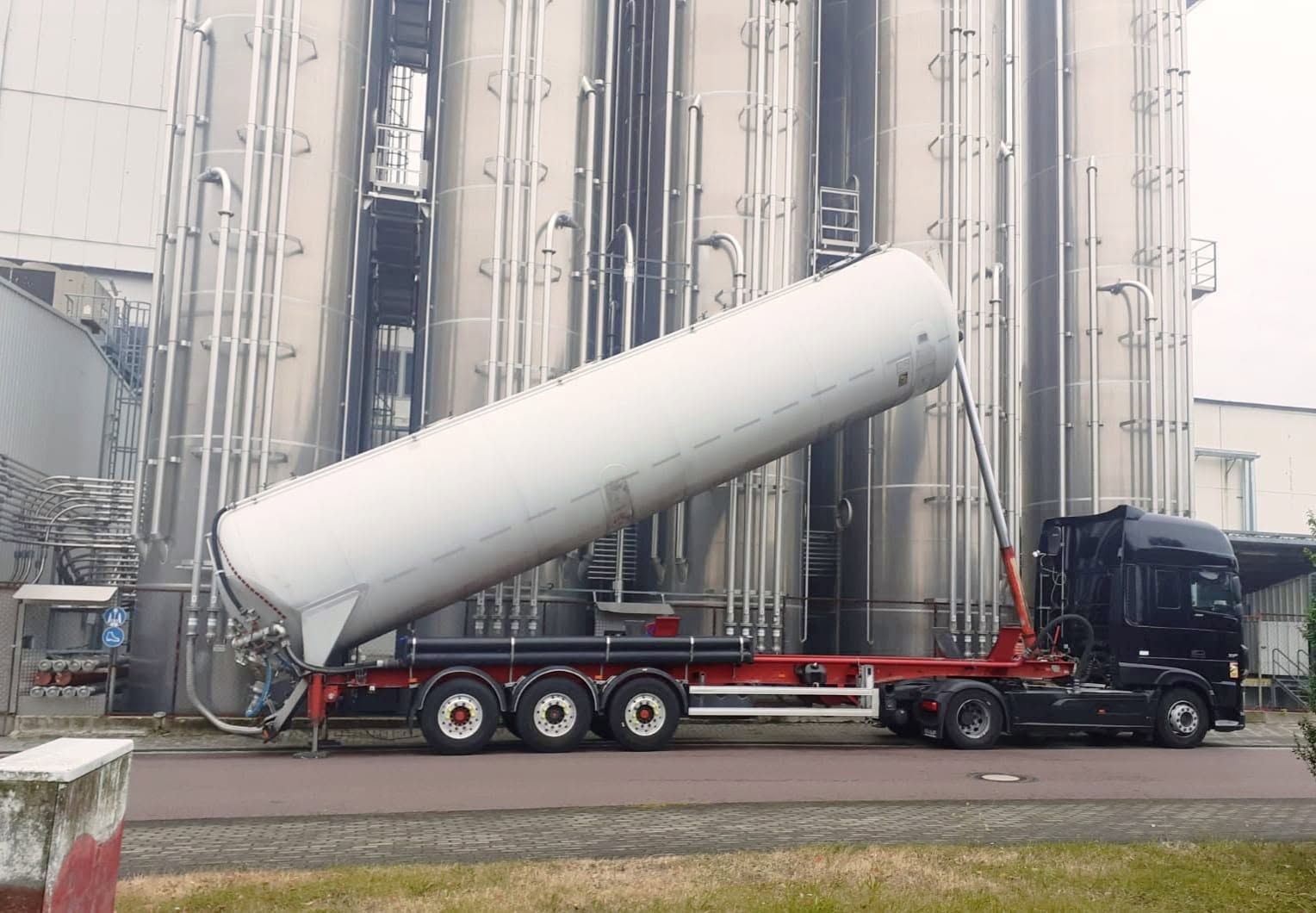
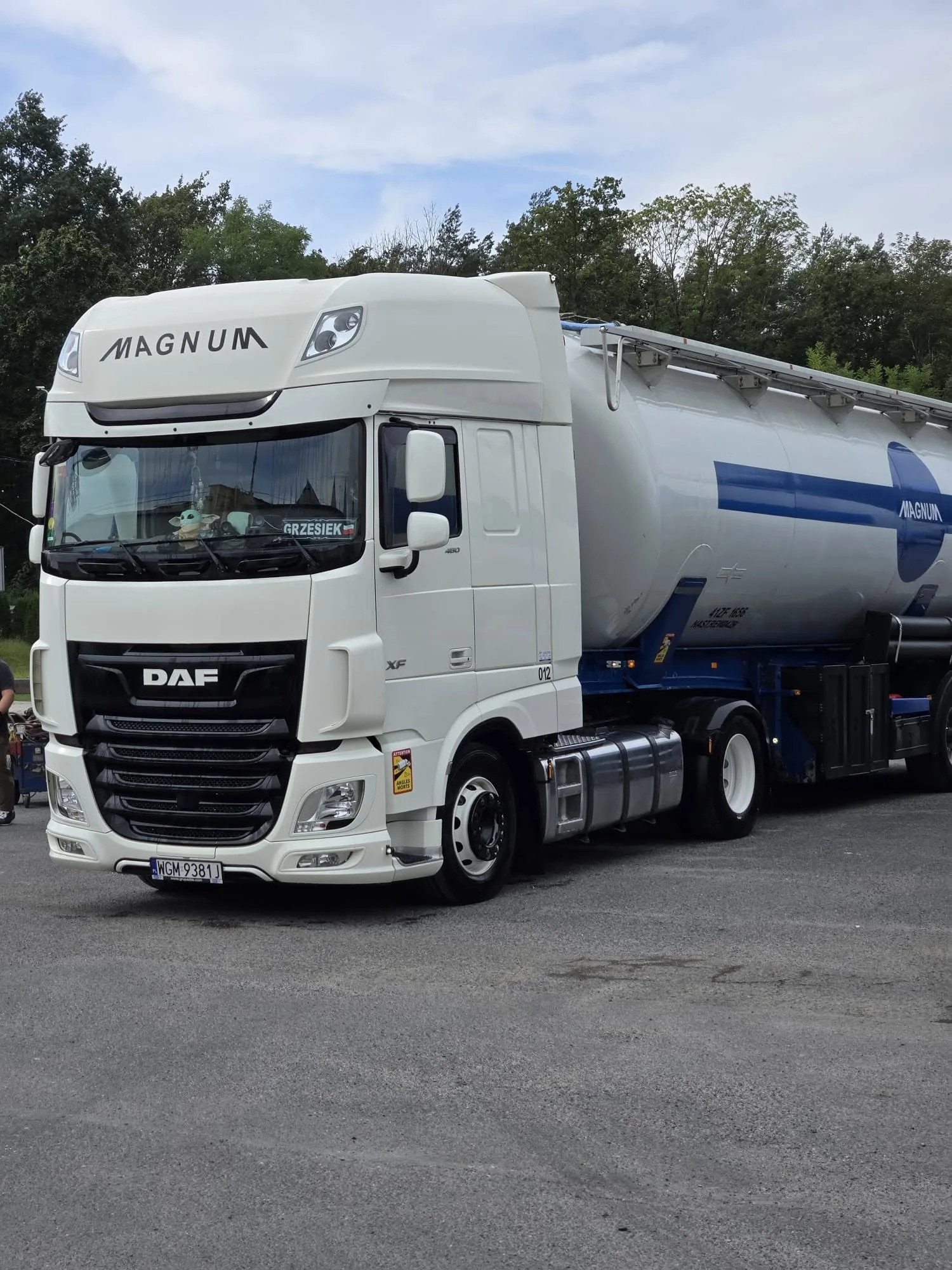
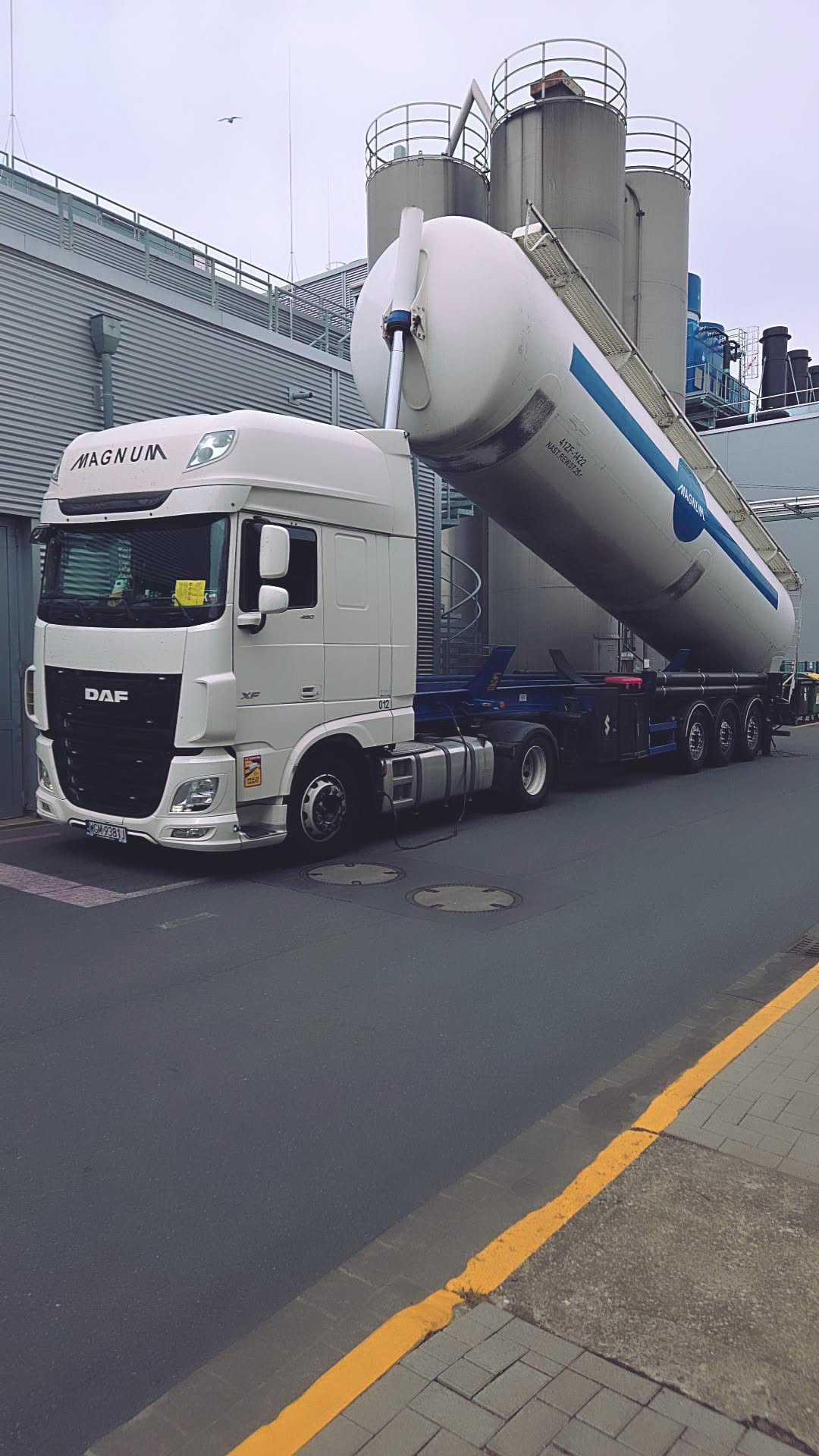
- Equipment: standard pneumatic silo trailers for PE/PP/PET regranulate
- Documentation: PCR Content certificate, RecyClass (a growing standard)
Scale: ~70% of current (2026) plastic recycling in the EU.
Chemical recycling — how it works and what transport it generates
The process (different technologies):
Pyrolysis (mainly polyolefins — PE, PP)
- Mixed films / multilayer waste → preliminary sorting and cleaning
- Oxygen-free pyrolysis at 400–600°C → pyrolysis oil (a mix of liquid and gaseous hydrocarbons)
- Pyrolysis oil → steam cracking → monomers (ethylene, propylene)
- Monomers → polymerisation → virgin-quality pellets
Depolymerisation (mainly PET)
- PET waste (bottles, fibres, packaging) → preliminary cleaning
- Glycolysis (with ethylene glycol) or methanolysis (with methanol) or hydrolysis (with water) → monomers (BHET, DMT, TPA + EG)
- Polymerisation → virgin-quality PET pellets
Solvolysis and other advanced methods — at the pilot stage.
Final product: pellets of 100% virgin technical quality, with EFSA food-contact certification, accepted by all buyers.
Transport characteristics of chemical recycling:
- Chemical installations — few in the EU (around 5–15 at present)
- Routes to a chemical recycler: 500–1,500 km (from all over the EU to a handful of installations)
- Equipment: pneumatic silo trailers for regranulate; chemical tankers for liquid monomers (intermediate stage)
- Documentation: a full traceability chain, ISCC PLUS often required (mass-balance tracking)
Scale: ~5% of current plastic recycling in the EU, forecast to grow to 20–25% by 2035.
Comparison — what we transport in each model
| Aspect | Mechanical recycling | Chemical recycling |
|---|---|---|
| Input | Sorted raw waste (flake) | Mixed / contaminated waste |
| Intermediate stages | Washing, drying | Monomers, oligomers |
| Output | Regranulate (90–95% virgin quality) | Regranulate (100% virgin quality) |
| Input transport | Waste containers, lugger, walking floor | Waste containers, walking floor |
| Intermediate transport | None (single-stage process) | Chemical tankers (liquid monomers) |
| Output transport | Pneumatic silo trailer | Pneumatic silo trailer |
| Typical distance | 100–500 km (local/regional) | 500–1,500 km (continental) |
| Documents | PCR Content, RecyClass | EFSA food-grade, ISCC PLUS, RecyClass |
| Recyclate price | 60–90% of virgin price | 100–130% of virgin price |
Routes to the main chemical recycling plants from Poland
From the PHS Magnum base in Chorula near Opole (4 km from the A4):
BASF ChemCycling Ludwigshafen (DE) — output pellets (R-PE/R-PP from pyrolysis) or input monomers (in supplier partnerships). Distance: ~1,200 km, 14–16 h, typically a 2-day cycle.
BASF Schwarzheide (DE) — a mixed pyrolysis installation, smaller throughput. Distance: 400–500 km, 5–6 h, a one-day cycle.
LyondellBasell Wesseling (DE) — chemical recycling installations under expansion. Distance: 900–1,000 km, 11–13 h, a two-day cycle.
Indaver Antwerp (BE) — chemical PET recycling. Distance: 1,300–1,400 km, 16–18 h, a two-day cycle.
Borealis Schwechat / OMV Linz (AT) — chemical recycling and polymerisation. Distance: 700–900 km, 9–12 h, a one-day cycle (feasible).
Versalis Mantua (IT) — chemical PE recycling. Distance: 1,100–1,300 km, 14–16 h, a two-day cycle.
Polish projects (2024–2027, in start-up):
- Anwil/Orlen Olefin — chemical PET recycling in Włocławek
- Synthos — chemical PS recycling projects
Once the Polish installations are up — domestic routes (200–400 km), a significant reduction in cycle length.
Technical requirements — what differentiates a silo trailer for chemical vs mechanical recyclate
For all R types:
- An aluminium or stainless steel pneumatic silo trailer
- Dedication to a category (food-grade vs non-food)
- A documented load history
- PPLP-compliant on-board equipment
Specific to chemical food-grade recyclate:
- A silo trailer dedicated exclusively to food-grade from the start of its service life
- Material certification (seals, aeration pads) compliant with food-contact standards (EFSA, FDA)
- A special wet washing procedure (if changing categories — not recommended for food-grade)
- A dry compressed-air blow-through procedure (absolutely essential — PET is hygroscopic)
Specific to chemical recyclate from pyrolysis (R-PE/R-PP):
- Possibly slightly elevated load temperature (up to 50–60°C)
- Tolerates standard silo trailers
What PHS Magnum handles in the recyclate segment
- Routes to chemical recycling plants in DACH — regularly to BASF Schwarzheide (DE) and Borealis Schwechat (AT), others on request
- A dedicated food-grade fleet — selected silo trailers with a certified load history
- A full PPLP equipment set — scoops, bags, funnel, straps on every vehicle
- Traceability procedures — a cycle register, e-CMR (rollout planned for 2026)
- Certificates: ISO 9001:2015 (DEKRA, current), OCS Europe (implementation in progress)
Contact for shippers in the recyclate segment: biuro@magnumchorula.pl , +48 602 716 551.
Related
- PPWR 2026 — impact on demand for R-PET, R-HDPE, R-PP recyclate transport
- Transporting PE and PP granules by silo trailer in the EU
About the author
This content was prepared by the PHS Magnum team in cooperation with Aleksy Pasternak — Managing Partner of the company and a bulk material transport expert with 35 years of experience in trading plastic pellets, recyclates, and industrial minerals in the EU. Aleksy publishes industry analyses on the expert portal pasternak.me , covering regulatory topics (PPLP, PPWR, OCS), technical topics (silo trailers, TDT), and operations (big-bag transloading, contract packing).